


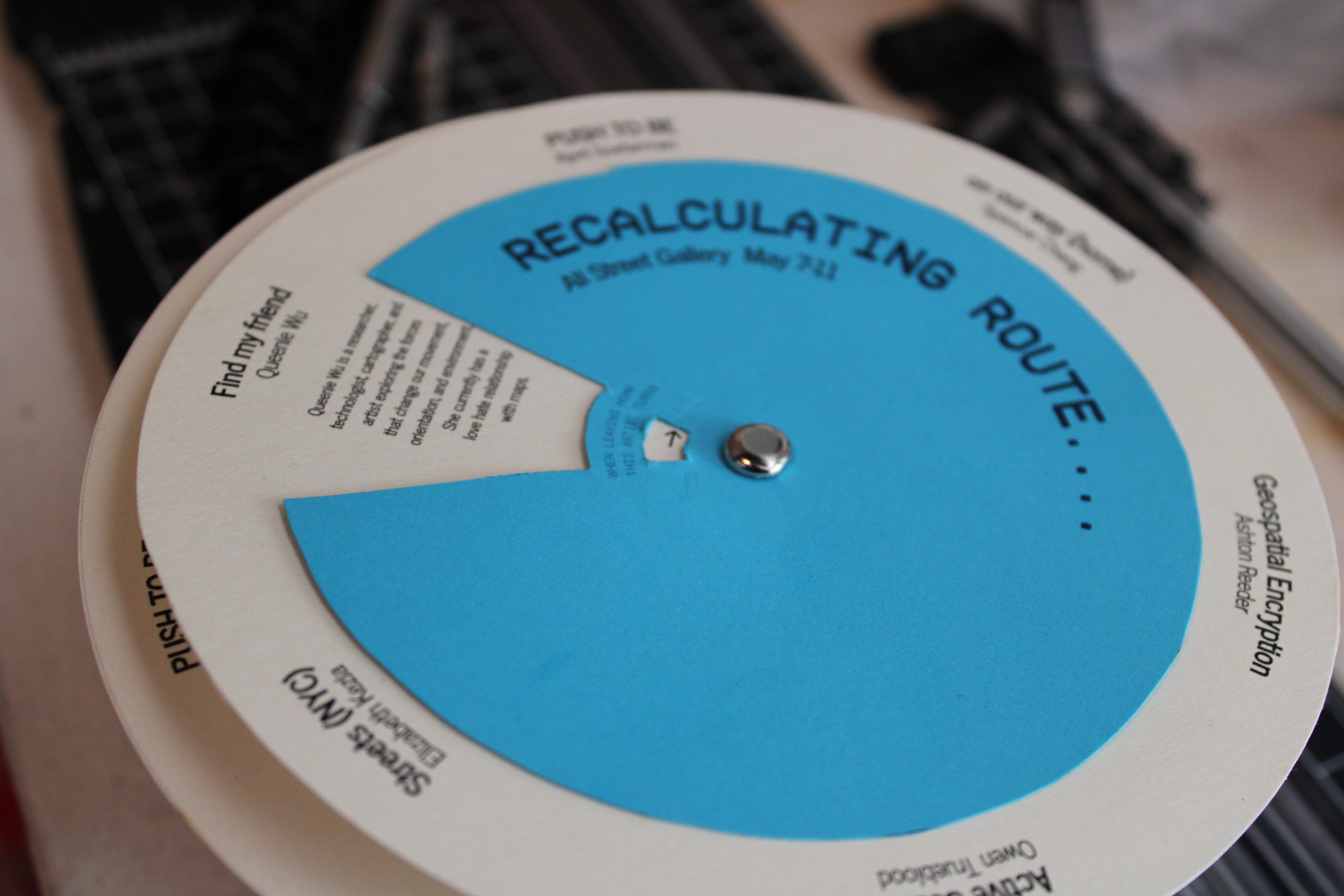
When I visited “Recalculating route…” at All Street Gallery in May, one of the first works I encountered invited me to, in fact, get out of the gallery.
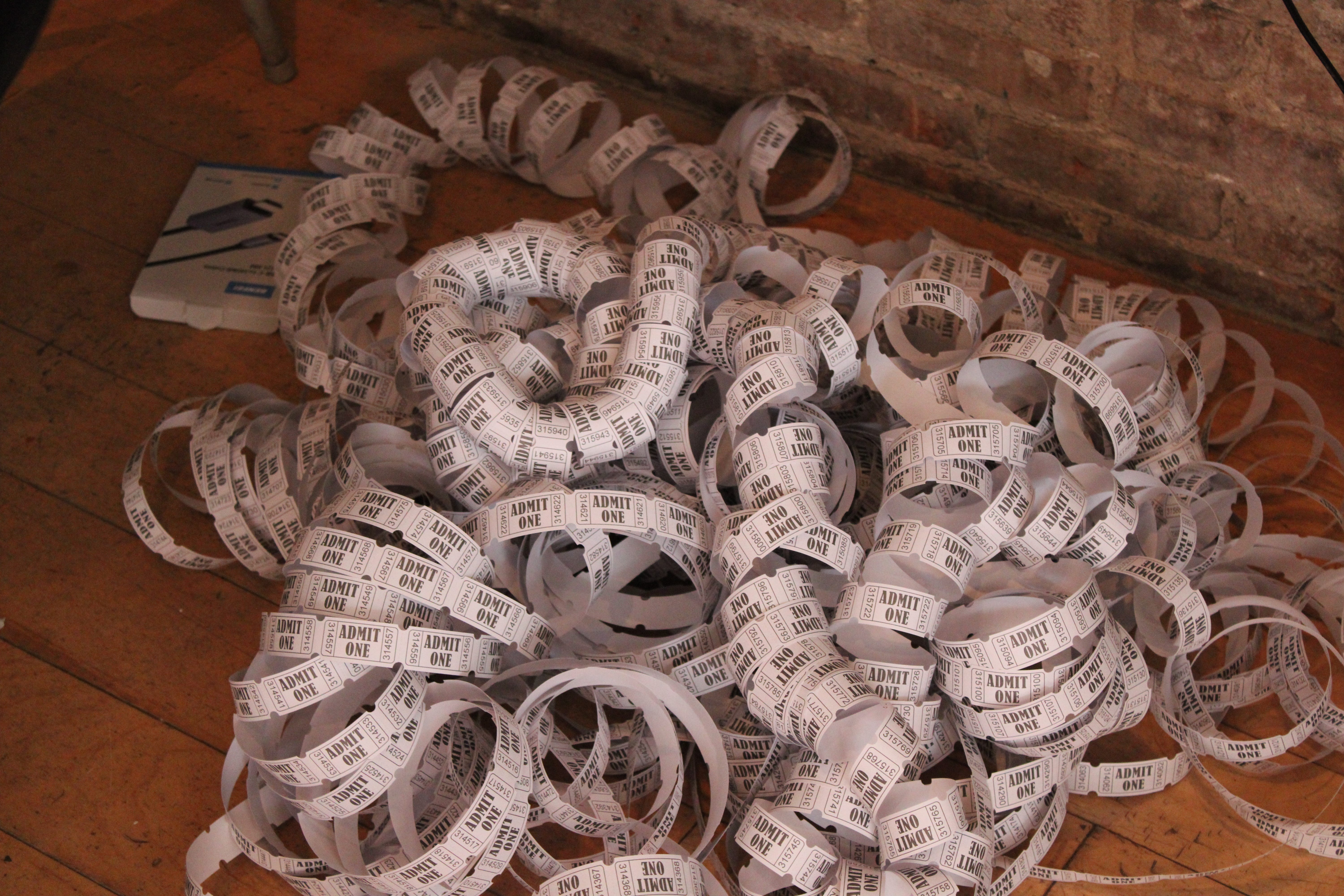
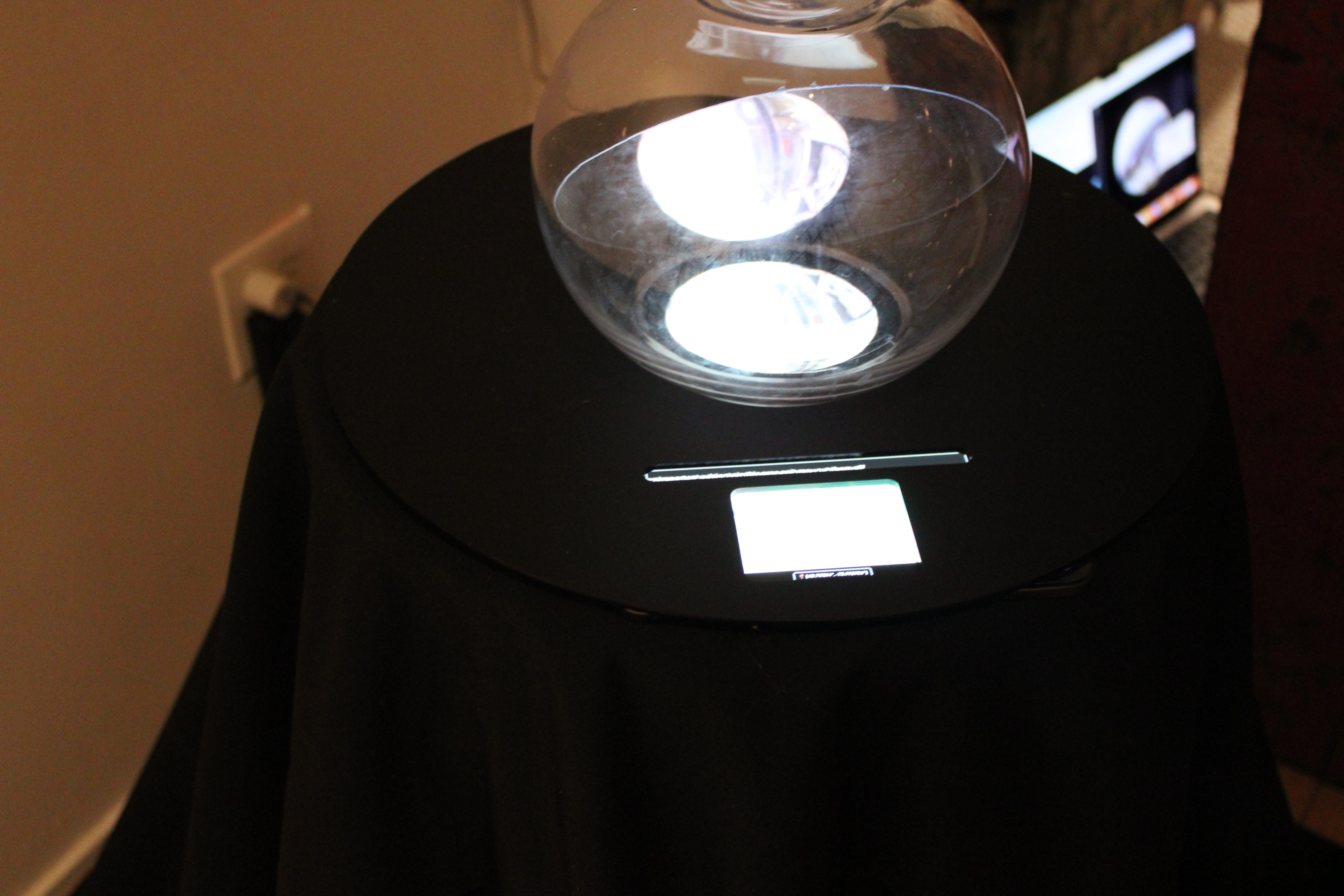
Inspired by Félix González-Torres’ candy works, Spencer Chang’s “on our way (home)” invited visitors to take a ticket from an overflowing pile. On each ticket was a QR code enabling you to download an app. Upon returning home from the exhibition, participants were prompted to grant location access. The trail they took was then added to a display screen that was part of the installation. (I tested it out prior to the exhibition’s opening reception by walking around the block and then returning.)
“Recalculating route…,” curated by Queenie Wu and held at All Street Gallery from May 7 to 11, included works by six artists, including Chang and Wu. As the show description puts it, the exhibition “reimagines top-down, satellite-view maps as bottom-up acts of storytelling, resisting surveillance and control.”
Such is the case with Chang’s installation, which works at the “murky middle” of sharing locative or other data: in between sharing it with friends and its collection by governments and institutions.
“I hoped to trigger a mix of conflicting emotions: anxiety and intimacy, fear and hope, skepticism and wonder,” Chang says. “I wanted to play with the scales of technology in our culture: how it can simultaneously represent an oppressive institutional force and a bunch of small human-scale actions.”
In curating the exhibition, Wu drew from her own practice of creative cartography. While there’s often a high barrier to entry in mapmaking, she aims to make work that is “more playful and collective,” she says.
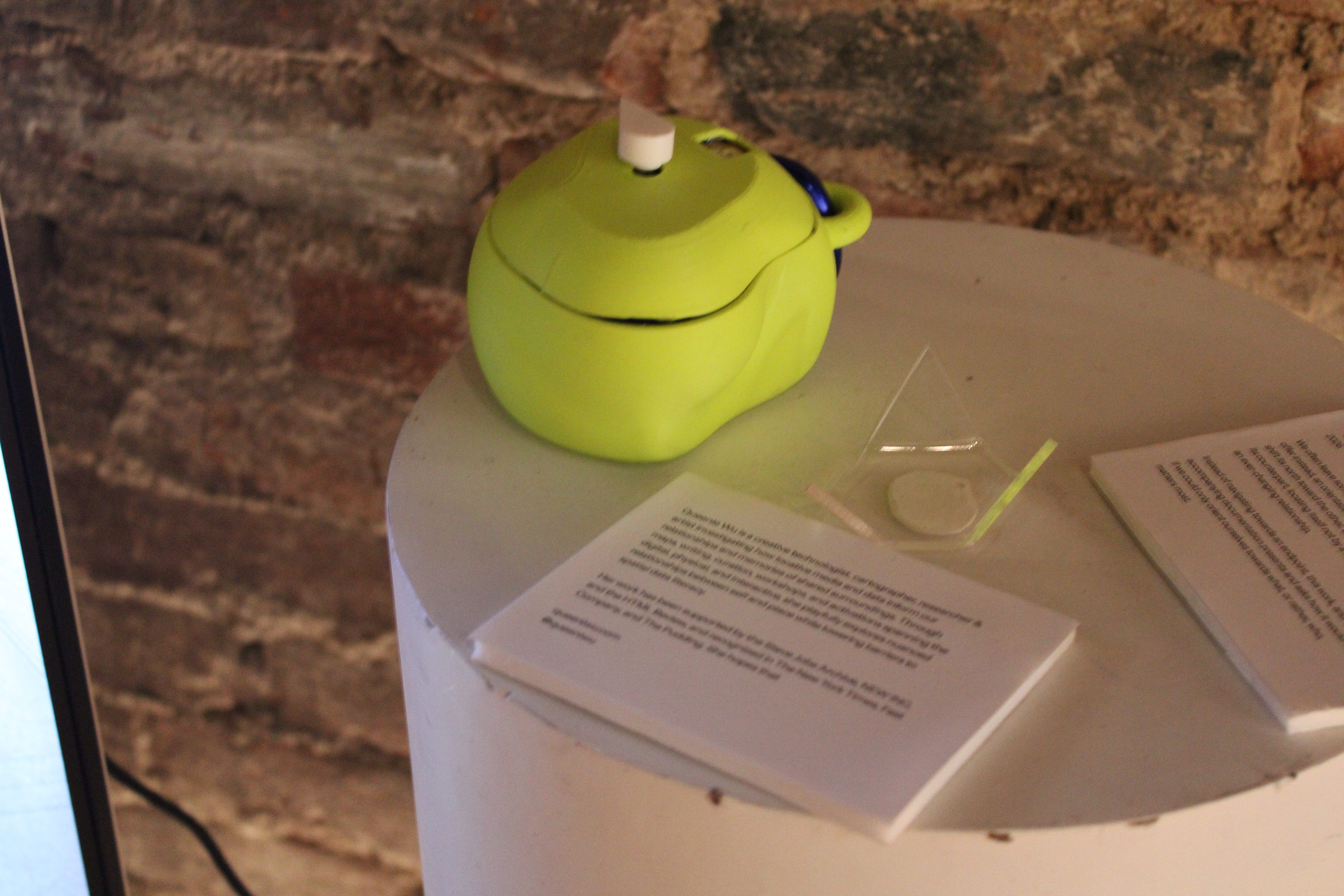
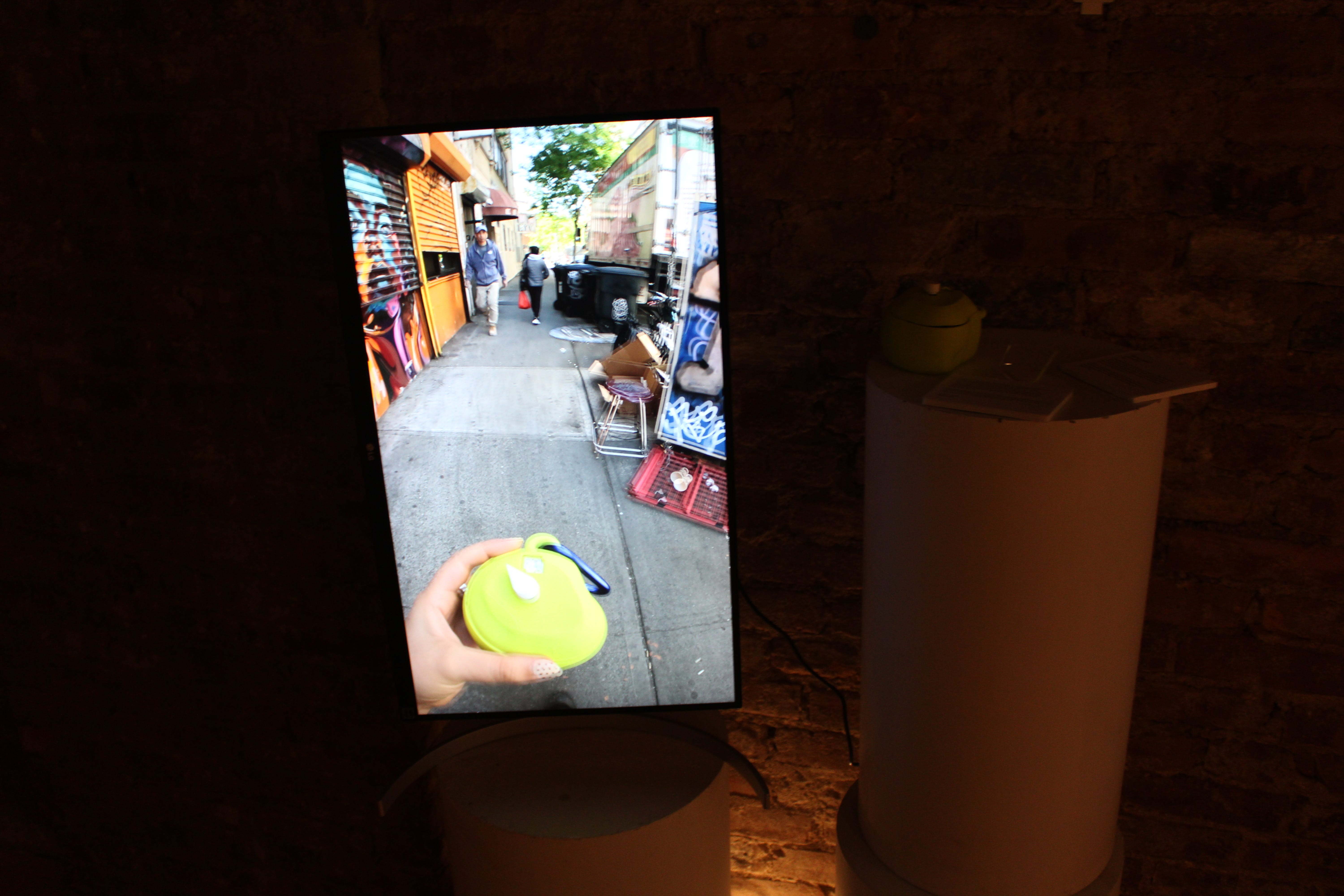
Wu gave the artists the constraint of not including a traditional map visual in each of their works. Her own piece, titled “Find My Friend,” consists of a pair of compass devices that navigate toward each other.
In ideating the work, Wu began thinking about how the potential for virality within today’s social media landscape can actually end up flattening our relationship with place. “A lot of times when things go viral, it goes viral for its visual elements and how much of a spectacle it is,” she says.
(The New York City “long line” has become a trend story genre of its own, with lines for everything from frozen yogurt to brand pop-ups to the viral “dot cakes” sold at Butterfield Market.)
In making “Find My Friend,” Wu thought about moving “towards what’s already close to us and also the people that matter to us and things that truly mean a lot.” Best friend necklaces were one reference point.
Also included in Wu’s installation was a video display of the compass pair in action. Wu used it to find Ashton Reeder, another exhibiting artist.
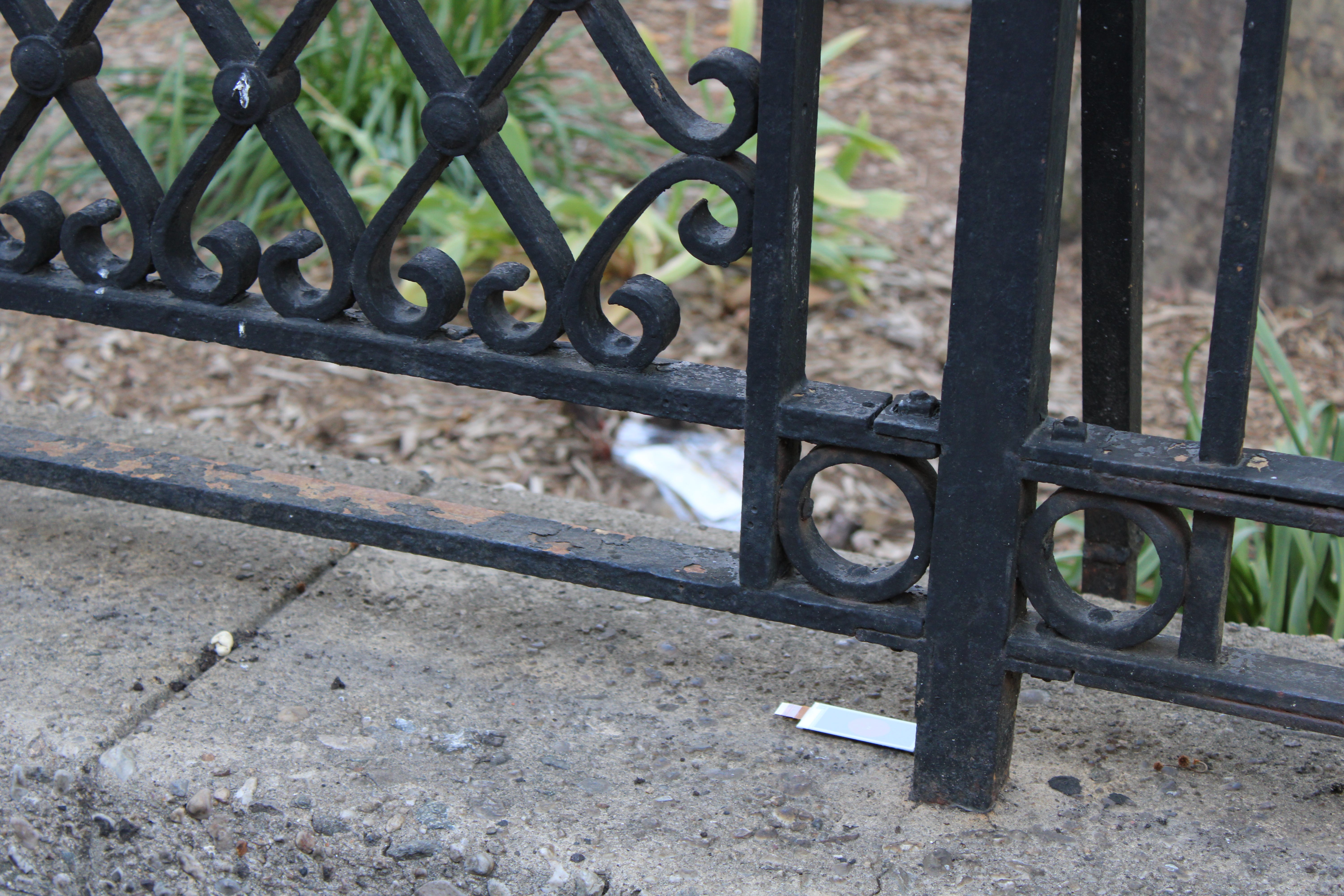
Before the exhibition’s opening reception, I stepped outside of the gallery walls again to walk with Reeder as he set up his work, “Geospatial Encryption.” Inspired by the hyperlocal internet, the work uses four touch points enabled by NFC, or near-field communication, technology. Participants had to first tap their phone on a tag within the gallery. They were then shown a puzzle to complete by going on a walk around the block (the gallery is on 119 Hester St.), during which they had to find and tap on four tags in the correct order.
Once they did that, they would unlock a poem. But that poem was hidden at first, filling in two letters at a time as more people found the tags. 120 visits would be required to completely reveal the poem.
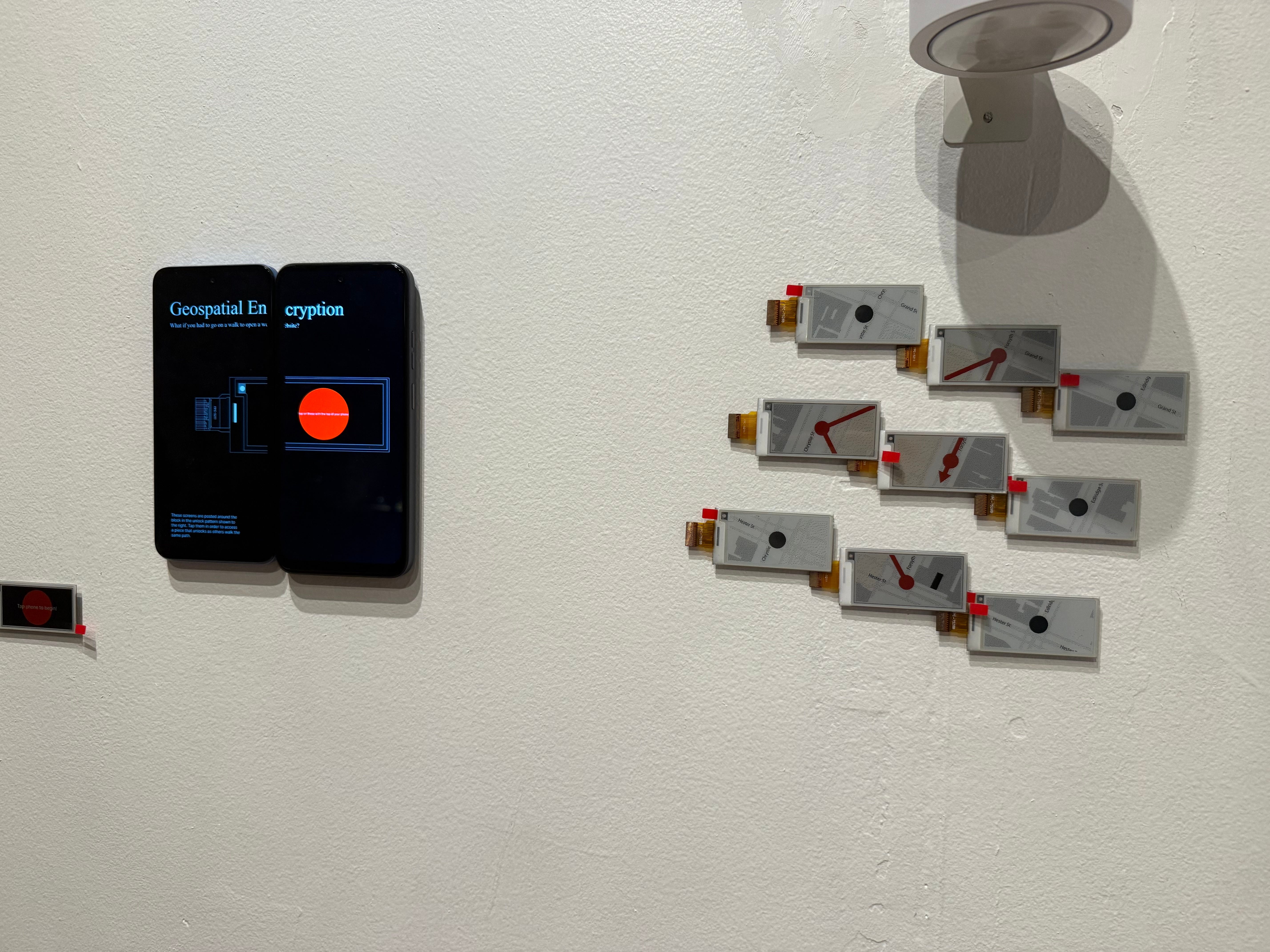
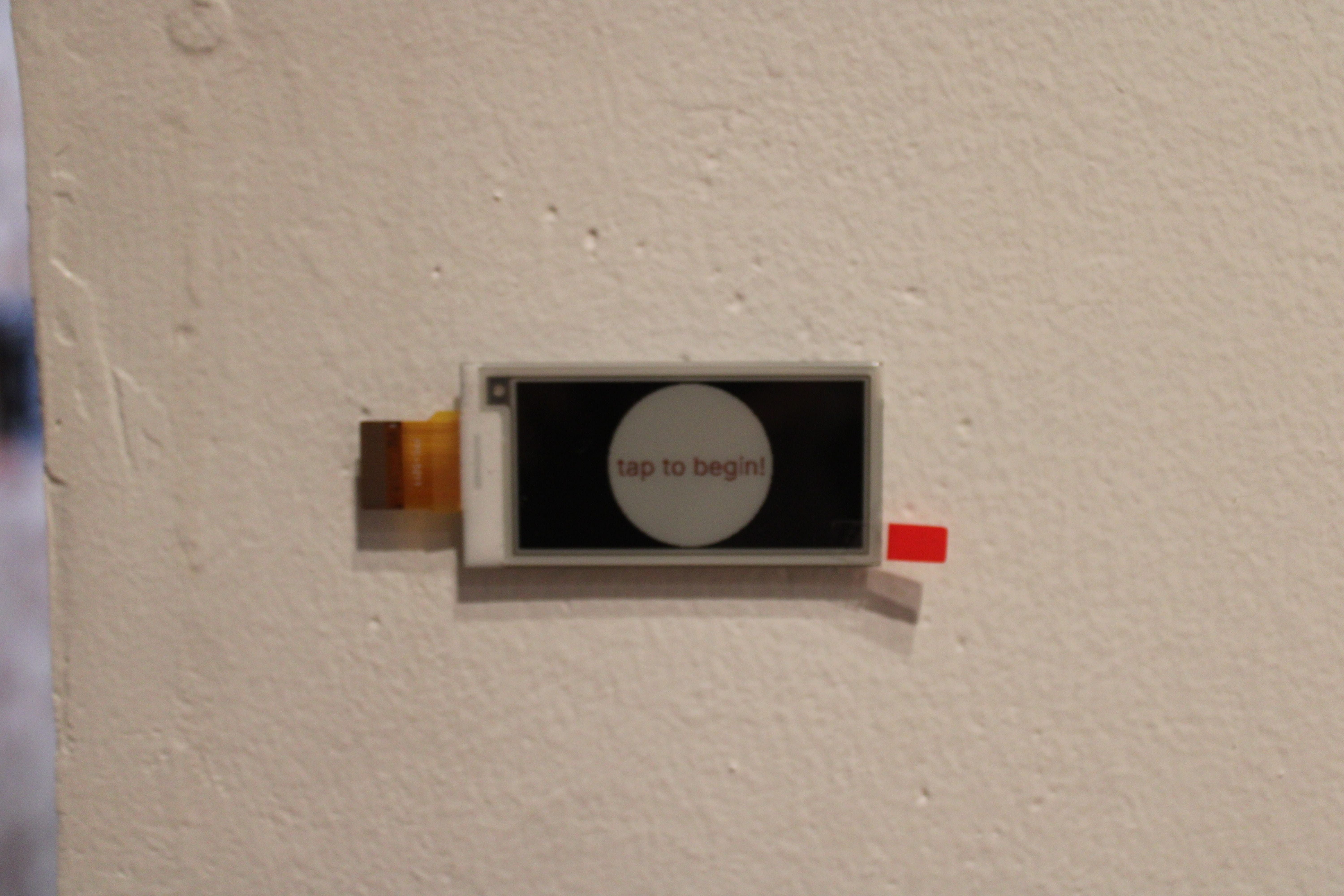
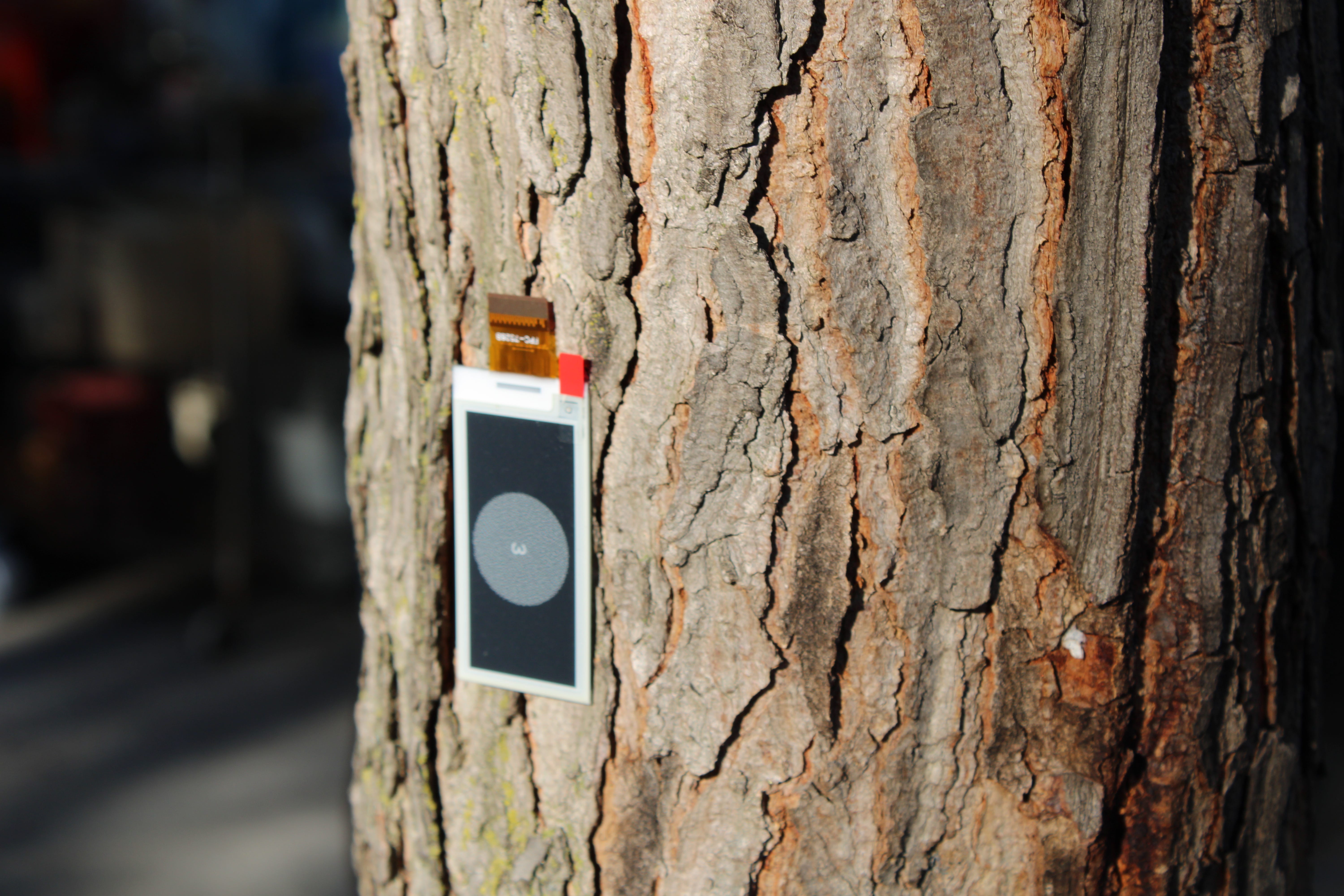
In working on the piece, Reeder pondered the question, “How can we make people get up, participate to build a web?” He was also inspired by his experience of digital platforms growing up, which involved forums and other platforms that had fewer algorithms and were more community-driven.
The participatory element, requiring effort from the community, Reeder sees as “the essence of what a digital platform should be,” he says.
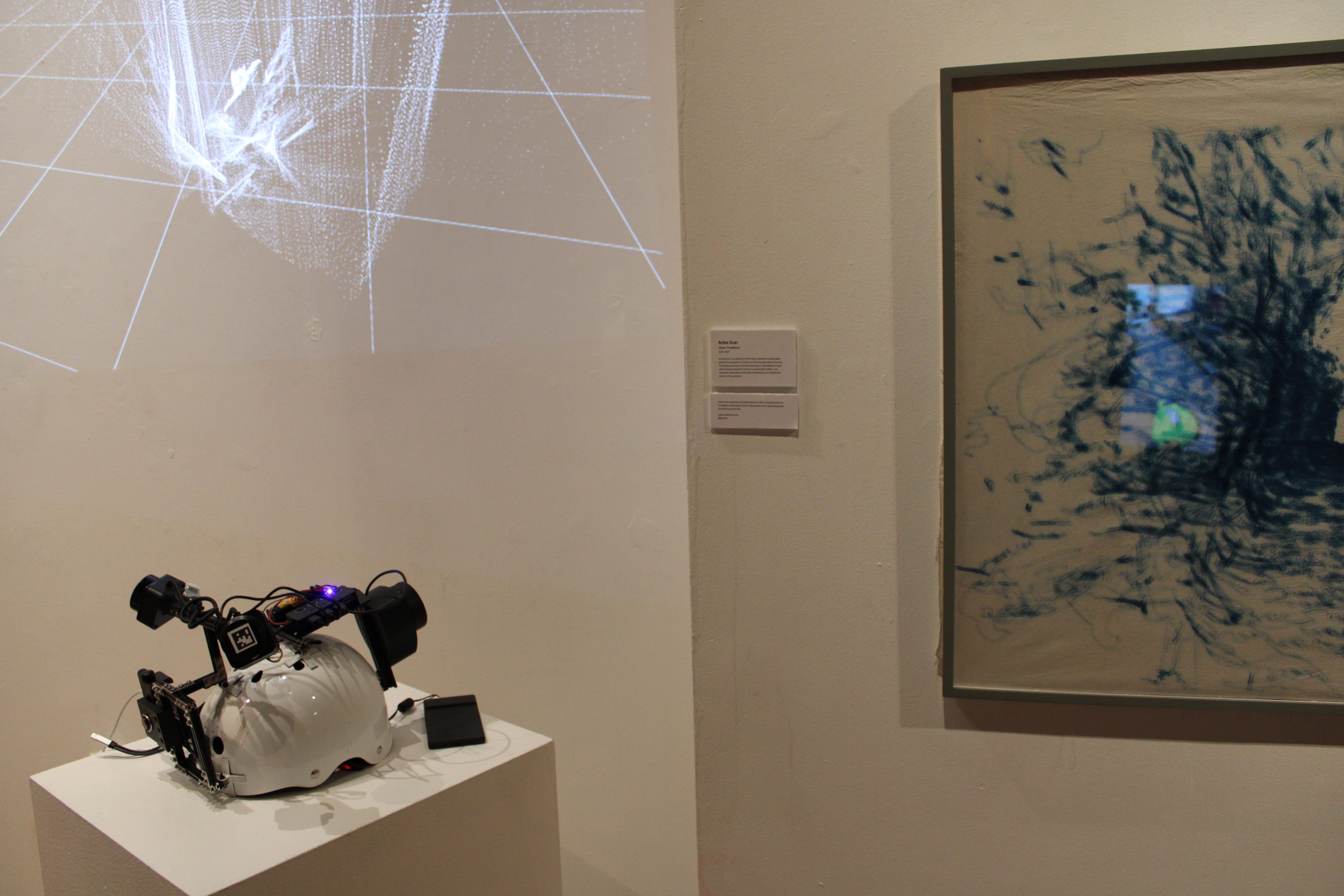
Other works similarly engaged with the space around the All Street Gallery. Elizabeth Kezia Widjaja’s “Streets (New York City)” guided viewers through 360-degree photography on the block, while Owen Trueblood created a 3D scan of the block, captured by rollerblading with a lidar system mounted onto a helmet, for “Active Scan.”
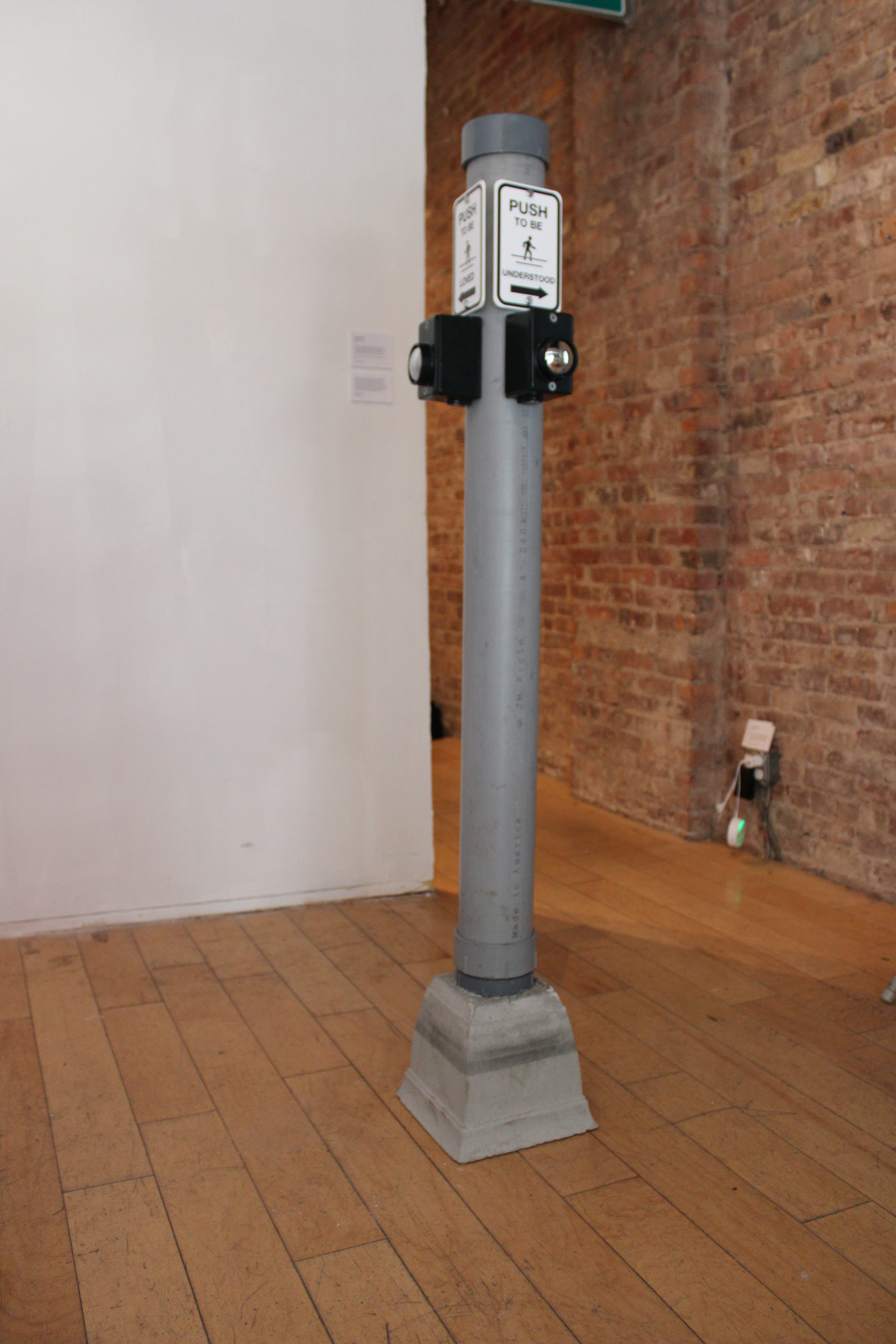
April Soetarman’s work “PUSH TO BE,” on the other hand, brought an artifact typically passed, and perhaps overlooked, outside by pedestrians inside the gallery space: crosswalk intersection buttons. On one side of the pole, “PUSH TO BE LOVED.” On the other: “PUSH TO BE UNDERSTOOD.”
Soetarman has guerilla-installed “PUSH” iterations in public spaces since 2015, as documented on “Weird Side Projects” on Tumblr and Instagram. “PUSH TO REMEMBER” and “PUSH TO FORGET” are another pair. But this was the first installation within a gallery.
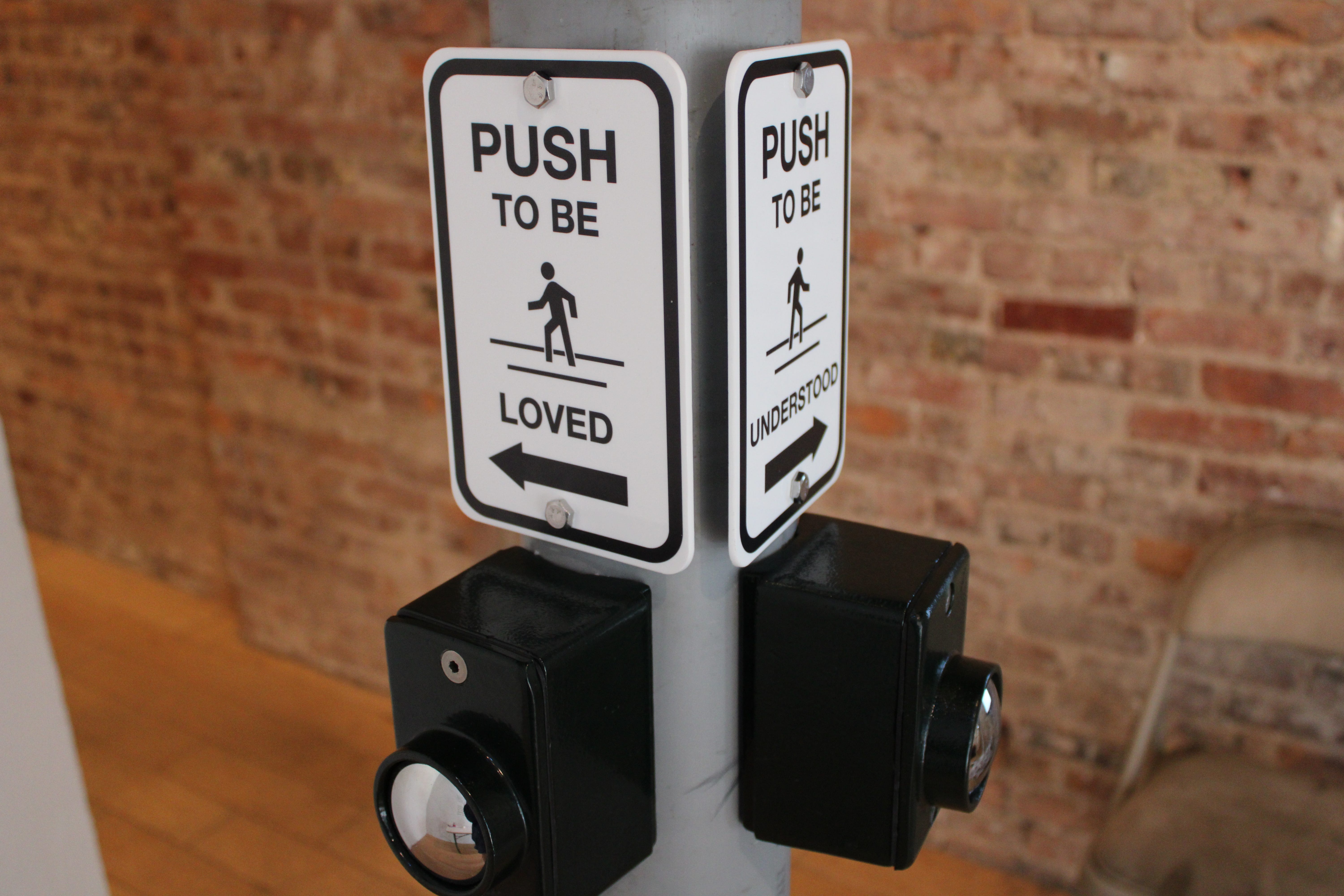
There were actually counters in each button to keep a tally. (“A lot of people have very strong opinions one way or the other,” Soetarman says. And sometimes people will stand in front of the provocations hesitating on a choice.)
The work is part of Soetarman’s larger piece, the “Department of Emotional Labor,” which explores the theme of emotions as infrastructure, systems, or relationships, using the language of bureaucracy. (“Just like the real-world Department of Labor does not directly provide physical labor, the Department of Emotional Labor does not directly provide emotional labor. Rather, it exists to facilitate communication and clarity between people, and provide the appropriate resources and structure to do so,” the Department describes.)
For Wu, there was pleasant surprise in how people interacted with the works both inside and outside of the gallery space. She hopes that participants, in addition to finding joy in the works themselves, are also able to think critically about how map technologies can simultaneously bring convenience as well as surveillance and institutional control.
Chang’s work similarly explores both institutional structures as well as how people, both collectively and as individuals, can create alternative paths. Other works, “we were browsing” and “we were online,” create portraits of browsing activity.
“With all of these works, I’m really interested in how I can create work that not only highlights contemporary issues but also provides some meaningful action or path towards an alternative human-centered future. They rely on believing in each other to pull us out of systemic problems we face.”
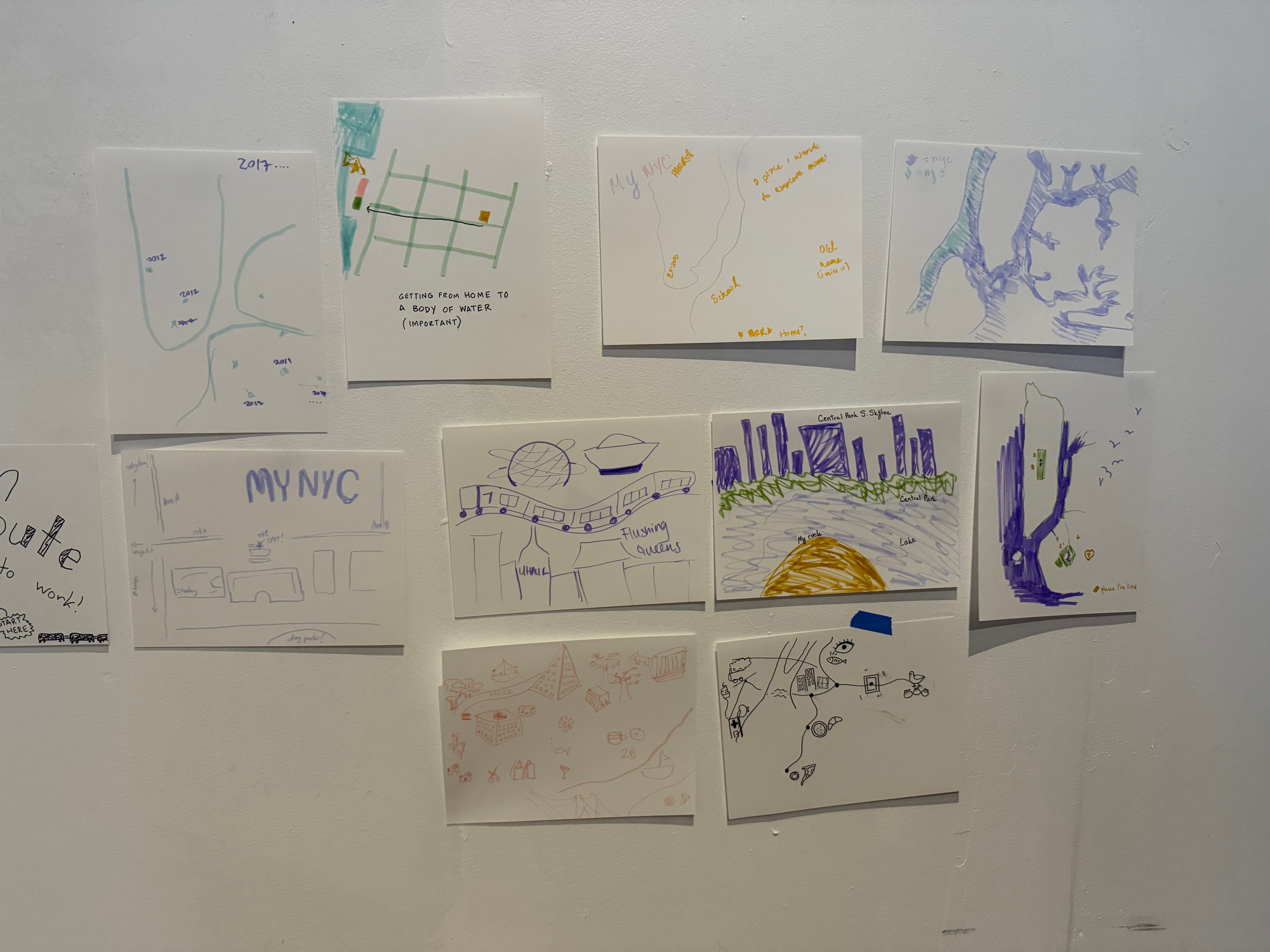
Wu spoke to the exhibition’s dialogue with the current moment, in which our relationships to place are shaped both by ultra-convenient map technologies and social media platforms like TikTok.
“…Virality is what I consider the most contemporary form of cartography,” Wu describes. “When something blows up on TikTok or Instagram, a lot of people use the term, ‘Oh, you’re putting this restaurant on the map.’” But when places get visitors who aren’t connected to their context or surrounding community, it can change a neighborhood’s fabric.
On the other hand, there’s now a more intentional movement embracing “walking and exploring as a process,” parts of which are actually documented on social media as well. Wu points to Spot Next Door, an Instagram page that documents going to the spot next to the one with the long line, and the walk-based work of Alex Wolfe, as examples of “experiments in subverting place as a predetermined destination.”
Wu envisions continuing to explore the themes explored in the exhibit. “I don’t think the artistic expression here is ending anytime soon,” she says. “I will always be thinking about place, movement, belonging, and seeing yourself in a larger picture.”


Very cool. Thanks for taking me through all of these exhibits. I'm excited about art that finds a way to engage our collective tension between digital and analog and/or anxiety and opportunity right now. All this energy has to be channeled somewhere! Thanks for tour-guiding.