


Updated Aug. 19 at 12:19 p.m.
For many of us, including the math averse, math curious, and even math enthusiastic, the subject is intimidating.
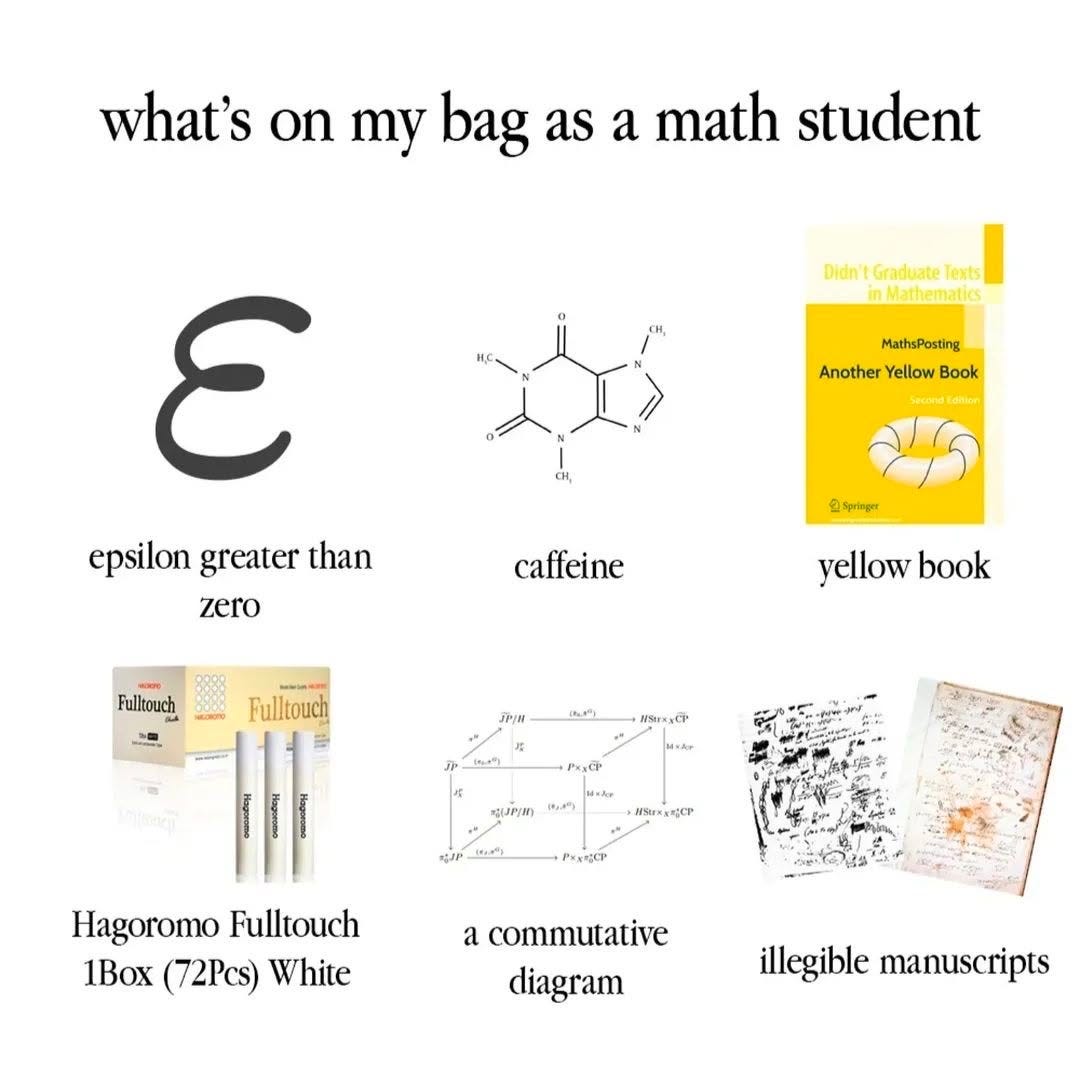
Through his account @maths.posting, Pablo Padilla hopes to make it less so (or at least, to give students a laugh along their journeys). A PhD student at the University of Nebraska-Lincoln, the account, which has grown to over 25,000 followers, covers both math topics and experiences like doing proofs left as an exercise for the reader.
Padilla was born and raised in Ecuador, where he did his undergrad at Universidad San Francisco de Quito. His experiences making films in high school and taking classes on design and art in college also shape the narrative and design elements in his memes.
Here is my conversation with Pablo Padilla, edited for length and clarity.
PHONE TIME: The first post on your meme account is from 2021. How did you go about starting it?
PADILLA: I created that Instagram account in 2019. It was for a [chemistry] project in high school. Then I had that account as a backup for photos and stuff like that, and I wanted to send some images from my old phone to my new phone. I had a bunch of math memes, so I started posting two or three of them, and people started discovering them. I have archived some of the posts because I didn’t make them, and I felt that if I’m going to have a meme page, I’m going to post things that I create.
It was originally called “memes with mathematical rigor” or something like that. But after it started getting more popular, I was like, “This is such a long name. I need something shorter for people to remember.” I used to follow a bunch of meme pages in the South American side of the internet, and many Chilean pages have “.posting” at the end of their usernames. So I decided to do @maths.posting.
PHONE TIME: The account has gotten a lot of traction—you have over 25,000 followers now. How fast did that growth happen?
PADILLA: It was pretty slow. It was really, really slow. I knew from the very start of the meme page that I wanted to make something I felt like I would laugh at. When people started reacting to those images and commenting on them, I realized they resonated with a lot of people. There was a craving for this type of image related to math. Some other math memes had been worn off or repeated so many times.
I had like five followers, and I had a lot of direct messages that were like, “I have never seen math memes like this before.” I kind of knew from the very start that it was going to take some time, but eventually it would get bigger and bigger. After a year or two of posting, I got like five thousand followers. I posted an image that said “Statisticians be like…,” and the moment I made it, I just knew it was a banger.
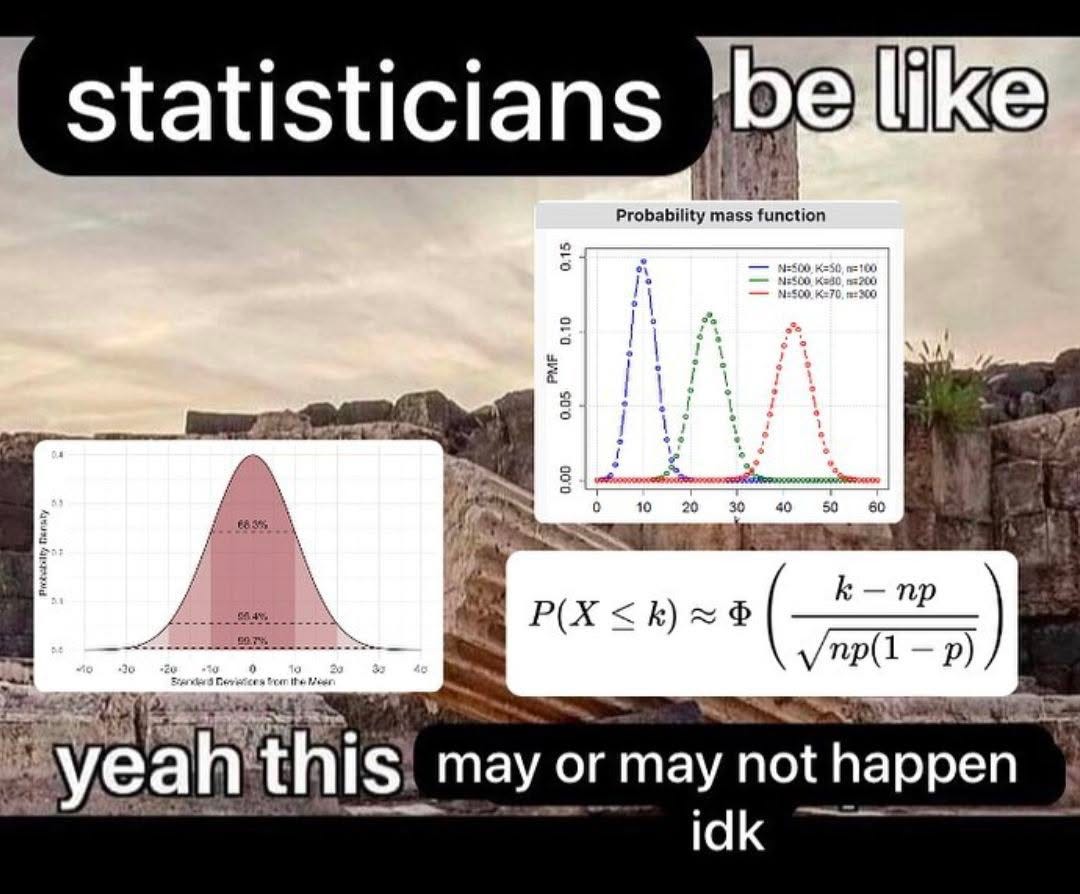
I got like 10,000 followers that night, and I started seeing my images on Pinterest and Twitter. Some of them had gone really viral.
PHONE TIME: How do you feel about them going viral? Do you watermark your memes?
PADILLA: I used to watermark some of my things, and I definitely do sometimes. At this point, it’s because if somebody sends me a meme that I made, I can say, “Oh, I made that meme.” But it’s just for the silliness of it. I’m in group chats with other people at the math department at my university. Some of them send me memes and they don’t know I made them.
I stopped doing it at some point because I thought it was just ego—me trying to tag things and show people, “Hey, this is what I made.” But I don’t think there should be a copyright. Nobody really cares about who makes the image. I’ve thought about that sometimes, because some people do actually care about the person that is behind the meme page. But I feel like by making a watermark, I’m taking myself too seriously, and that’s beating the purpose of having a meme page and trying to make people laugh.
PHONE TIME: I like your perspective about this because I’ve asked a few other meme creators about this, and everyone kind of has different viewpoints. Sometimes it’s weird to see something you made, and you’re like “How the hell did it get over here, on this other side of the internet?” But I totally resonate with this idea of once it’s out there, it can kind of go wherever.


What’s your practice of getting ideas for memes? Do you have any system or ritual or is it all spontaneous?
PADILLA: It works both ways, but I would say the first is more accurate. When I want to make a post, I sit down and dedicate some time in my day to consume or scroll as much as I can. I’ll find something that is like, “Oh, this could work for a math meme if I just tweak some of the words in this,” or something that sounds funny or goofy if I take it out of context. I have my notes app for ideas where I’m like, “This could be funny.” I use Photoshop and if I can’t find the original image, I screenshot the image and I put in some very bad brushwork. I paint over it so it doesn’t look too planned.
When I'm in Photoshop, I usually try to distort the image so it looks lower quality. I used to like the high-quality, full 4K memes, but now I don’t. I feel like when corporate people started jumping into the memeosphere, that was their thing. So I just want to set my memes that are handmade or “organically grown” apart. They have this lower-quality making aspect to them because I feel that it looks a little more genuine.
PHONE TIME: For sure, they have an element to them that always looks a bit sanitized or cleaned up, not even in the content but the design format.
How does your background in film and design shape your memes?
PADILLA: I’ll use principles of design. I try to think about the hierarchies of the images—which image has more priority, where I should place the most captions and stuff like that. There’s definitely the know-how of how to use the tools. I think there’s also some sense of narrative. When I post a carousel or photo dump of memes, I try to loosely relate one image to the one that comes next.
That comes from conversations I’ve had with people that post online or that analyze internet culture. I’ve also talked about managing public image with people who work in communication studies. You have to learn to separate the person you are with the person that you are online. You can be really genuine, but if you’re going to be online and you want to tune it up, you have to be mindful that what you see on the internet is different than IRL.
PHONE TIME: How do you navigate both the social media space and academia? Even though more and more academics are sharing their work online, the traditional formality of academia contrasts how information and jokes are usually shared on social media. How do you navigate those two worlds?
PADILLA: I have found that mathematicians are really, really goofy. A lot of people in the math department that I work with share my memes—even before they knew I was the person behind them. I feel like I can tune how serious I am. If I’m online, I can tune it to the maximum of really goofy, but if I’m in a serious meeting, I can be on my toes.
The moment that gave me the most confidence was when taking a class with my now-PhD advisor. He’s a goofy guy. He was making a lot of jokes, but it’s like, he’s an adult. His type of humor is probably very different from mine. But by the end of the class, when the semester was about to end, he was like, “I’m going to share my favorite meme,” and he put on a video of YouTube poop [a genre of video edit or collage often involving quick, annoying, and abrasive effects] This guy was fifty-something years old, I think, and he was sharing a YouTube poop with the whole class. He was projecting it on the screen, and that for me was a moment where I was like, “If he can do this, why can’t I? Why can’t I go and take pride in having a meme page?”
I’ve been spotted in conferences and people have come up to me and said, “Are you @maths.posting on Instagram?” Some people have written things to me that are like, “Hey, I didn’t understand this meme, but this gave me the courage to talk to an academic about this. To me, it was just them showing them a meme that they were explaining to me, and this is how I learned about this stuff.” All of those little things added up to me kind of owning it.
The only times I’ve felt I cannot share it with people is with my students. I don’t want them to see me online being like, “Oh, my teacher posted this image and it contains cuss words” and stuff like that. But again, we all do that. We all say or have some humor. This is something I’ve been reflecting on recently, because I got a review from a student in my teacher evaluations that was like “I found that he has a meme page and it’s really funny,” and I wasn’t sure how I felt about that.
There are times where I wish I had hidden something before my students were able to see it, but then I look at other math content creators that are also professors. And I’m like, if your students can see that, they can definitely see my things.
PHONE TIME: My experience with the math internet is mostly limited to people who make general education content. I’m wondering if and how the “math internet” has evolved since you started making memes?
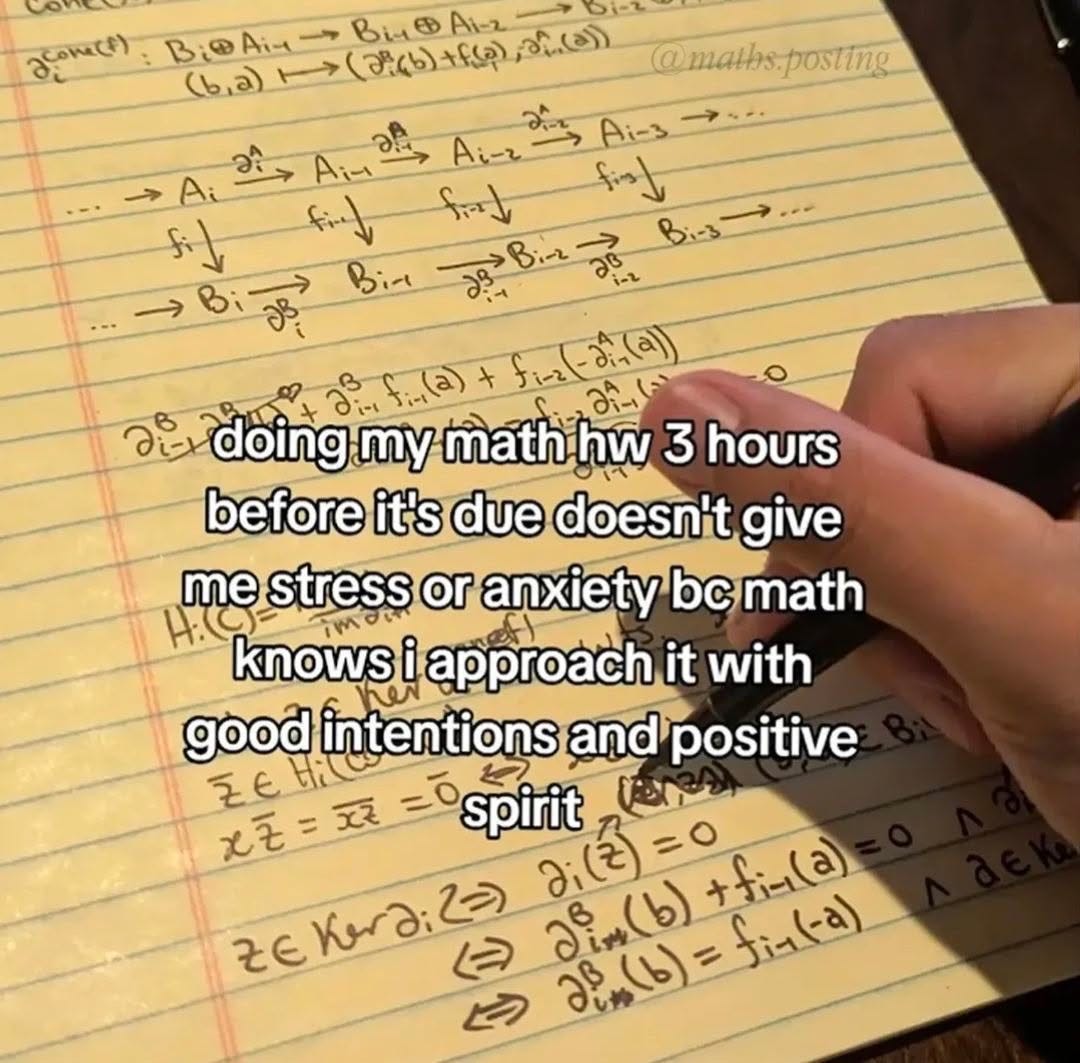
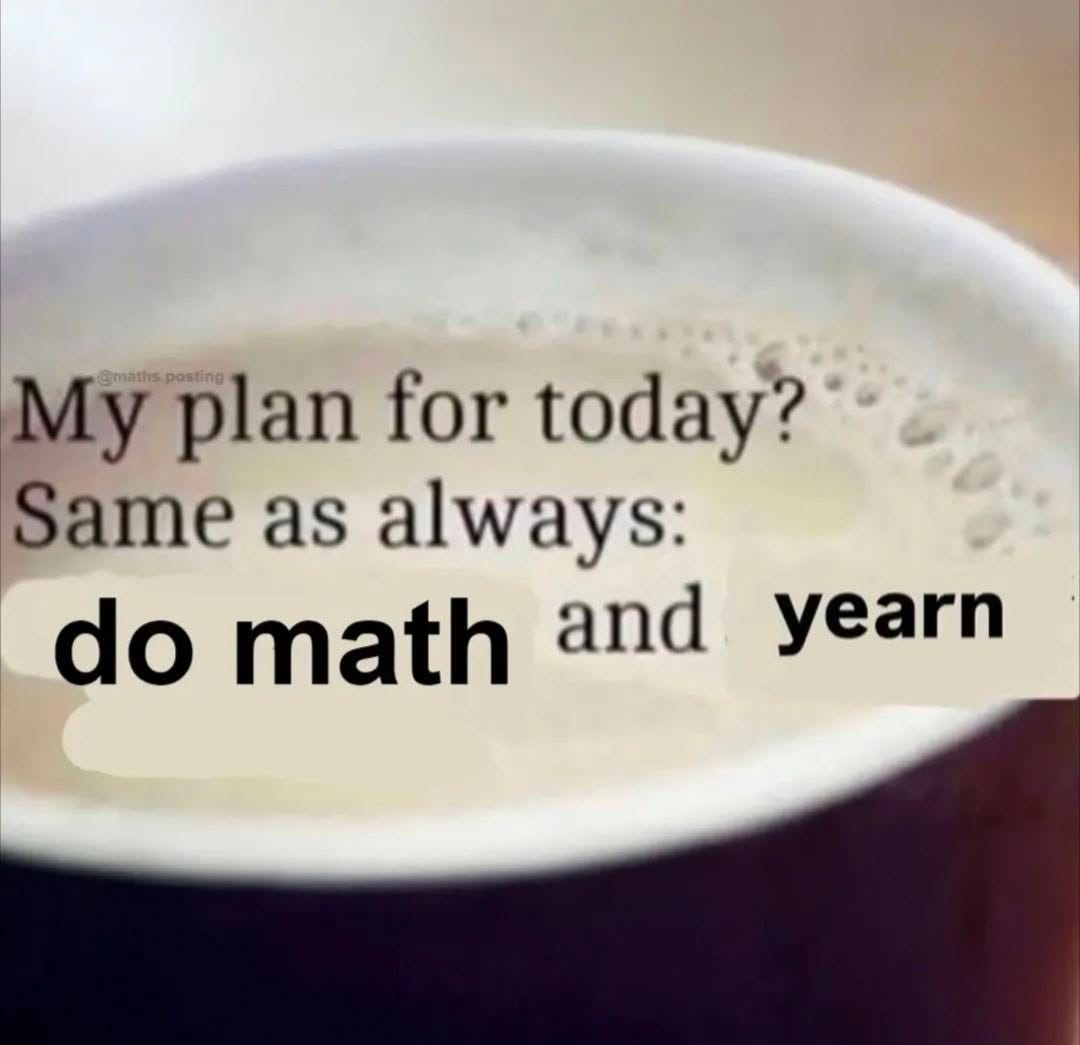
PADILLA: I feel like I’ve lived through three iterations of the math scene on the internet. When I was very young, I was on a Facebook group that was like, “The Science of Pizza,” Pizza written with the π symbol for pi. Facebook was one of the biggest hubs for people to post their math memes. After that, I jumped into math Twitter. That was such a discovery for me because a lot of professors, researchers, or people who were just really interested in math would post their findings or make funny comments.
That created a community of people where a lot of professors knew each other and about students. People would get projects out of this, from “Oh, I liked your tweet” to a conversation between them, and then all of the sudden they were working together.
I was kind of sad when Twitter was bought by Elon Musk and changed to X. A lot of math people left math Twitter after that. There’s still some people that remain, but it’s not the same. Some people tried to jump into Bluesky, but I don’t think that ever took off. I was doing my thing on Instagram because I like pictures, I like seeing things. People who post their creations or their pictures post on Instagram. It doesn’t feel like a LinkedIn, which is a feeling that I get from Facebook.
I feel like I kind of build a net that can catch the younger generations of mathematicians who are using Instagram. Some of them were tired of the same math meme being repeated over and over again. They were like, “This feels fresh to me.”
[People in math departments having social media presences] is becoming more common. I see it more with students than with professors. People trying to create content about math, not necessarily memes, but Instagram Reels that are like, “a day in the life of a mathematician.”
I’ve also seen a narrative floating around that’s like “You have to lock in in a room and be alone and study math, get stronger and better.” I feel that narrative is very damaging and that’s one of the things that I try to combat. The memes try to make fun of people who think they can learn everything on their own, and they don’t need anyone else to learn things because that is not true. To do math, we rely on people that came before us, and we also rely on the people that we work with.
PHONE TIME: You also post in both English and Spanish.
PADILLA: There are memes that work in Spanish that don’t work in English. If I translate them, it won’t make sense. There are layers of culture on top of a meme. There are things that are funny just in reference to other things, or funny if you were like, on Facebook in Spanish in 2012. The same thing happens in English, but I find English to be a little bit more versatile when you’re making a meme. Although Spanish-speaking countries have their own pretty big meme scenes, I feel like memes in English are little more universal because a lot more people speak English.
PHONE TIME: Where do you want to go with the account in the future?
PADILLA: I would like to make some merch. I’ve been against the idea of making merch for my meme page because then it feels like I’m trying to monetize on the followers that I have, and I have mixed feelings about that. But I have met people at conferences, and they’re like, “When are you going to make stickers or stuff like that to hand out?” So I’ve been trying to figure out a way to make something people can use or put on their laptops as an “I’m in the math internet sphere” identifier.
In the long term, I would love to have a newsletter about math. I make a lot of memes; I have been a little burnt out of making memes. I feel like I’ve squished all the meme juice out of the lemon and now I’m a little drained. But ideally, I would love to have real serious conversations about math online. I don’t mean that memes don’t have the capacity to do this, but I want people to also start talking about the ways in which we use math and how it affects society—politics, how math shapes culture, how to be more mindful about the ways we teach math and stuff like that. I would love to have those discussions with people online and post them in a little more serious way.
But I love the memes. I would continue making memes as long as my ideas keep flowing.
Updated to clarify description of Padilla’s background experience in design and film.
So proud of Pablo