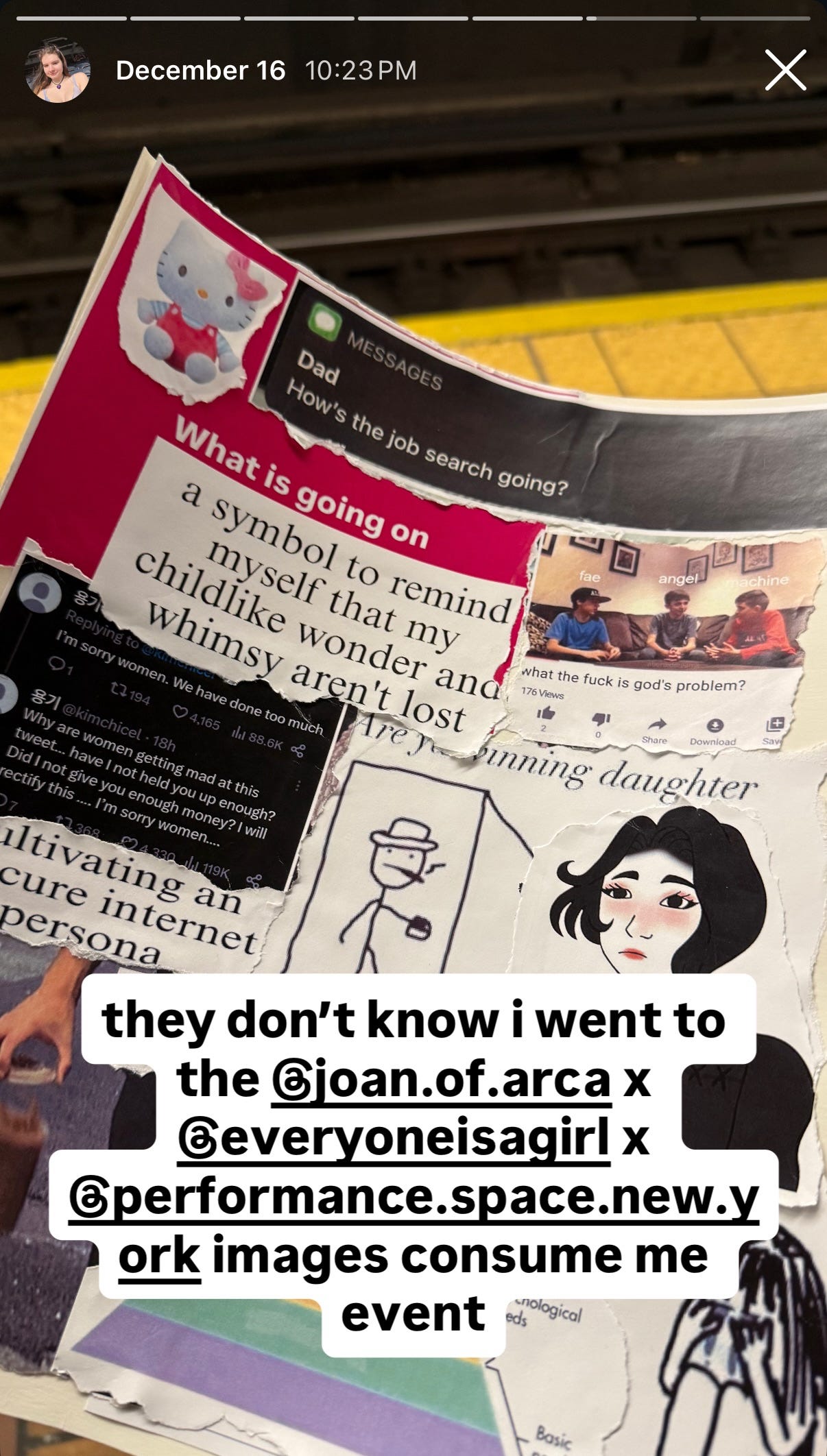
Earlier this month, I fulfilled a dream childhood me couldn’t have imagined I’d have: I gave a talk on the history of the feminist internet, leading up to contemporary Instagram meme pages. My short talk was based on a thesis I wrote my last year of undergrad, which I’m still hoping to add to at some point. As I said there, it was maybe my first presentation since around 8th grade, so I appreciated everyone bearing with me through the nerves.
I was lucky enough to be in community with everyone at images consume me, an event hosted by Performance Space New York in partnership with Ester Freider’s everyone is a girl and @joan.of.arca, a.k.a. Sophie Browning (I interviewed Ester for PHONE TIME prior to the planning of this event, and Sophie is a mutual-turned-IRL friend! They are both doing brilliant work touching on girlhood online.)

Here are a few points I hoped to address:
The feminist internet as an intellectual and creative lineage, which has become increasingly visual over time. I started by talking about the weblogs that emerged in the 1990s. Tracy L.M. Kennedy describes weblogs as having “evolved from early Web sites that functioned as early online journals or diaries, reporting and keeping running commentaries on people’s daily activities and interests.” Teen girls and young women built Tumblr “girl blogs” as a distinct tradition of online feminist writing, inspired by the older weblogs. And as feminist activity took root on Instagram, it became increasingly driven by visuals and aesthetics, while the platform itself was becoming more commercialized.
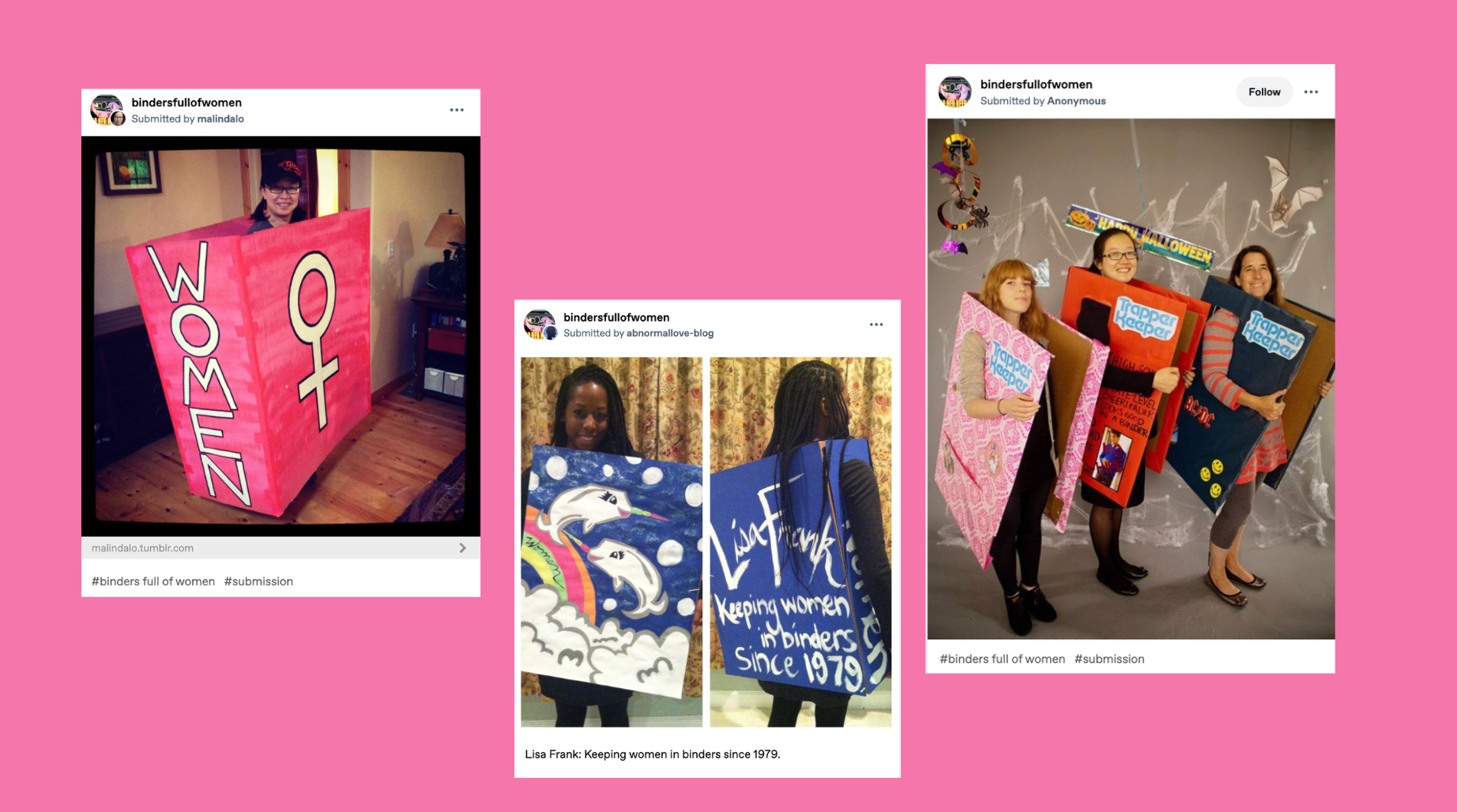
The interplay between the offline and the online. A theme in a lot of my writing is that the offline and online are not two separate realms, but inform and shape each other. This is also true of the feminist internet. An example I brought up was the “Binders Full of Women” meme, which emerged after a comment then-Republican presidential candidate Mitt Romney made during a debate. The phrase made its way into online memes (which were very 2012 stylistically, as I noted during my talk), but also offline, through performance and Halloween costumes.
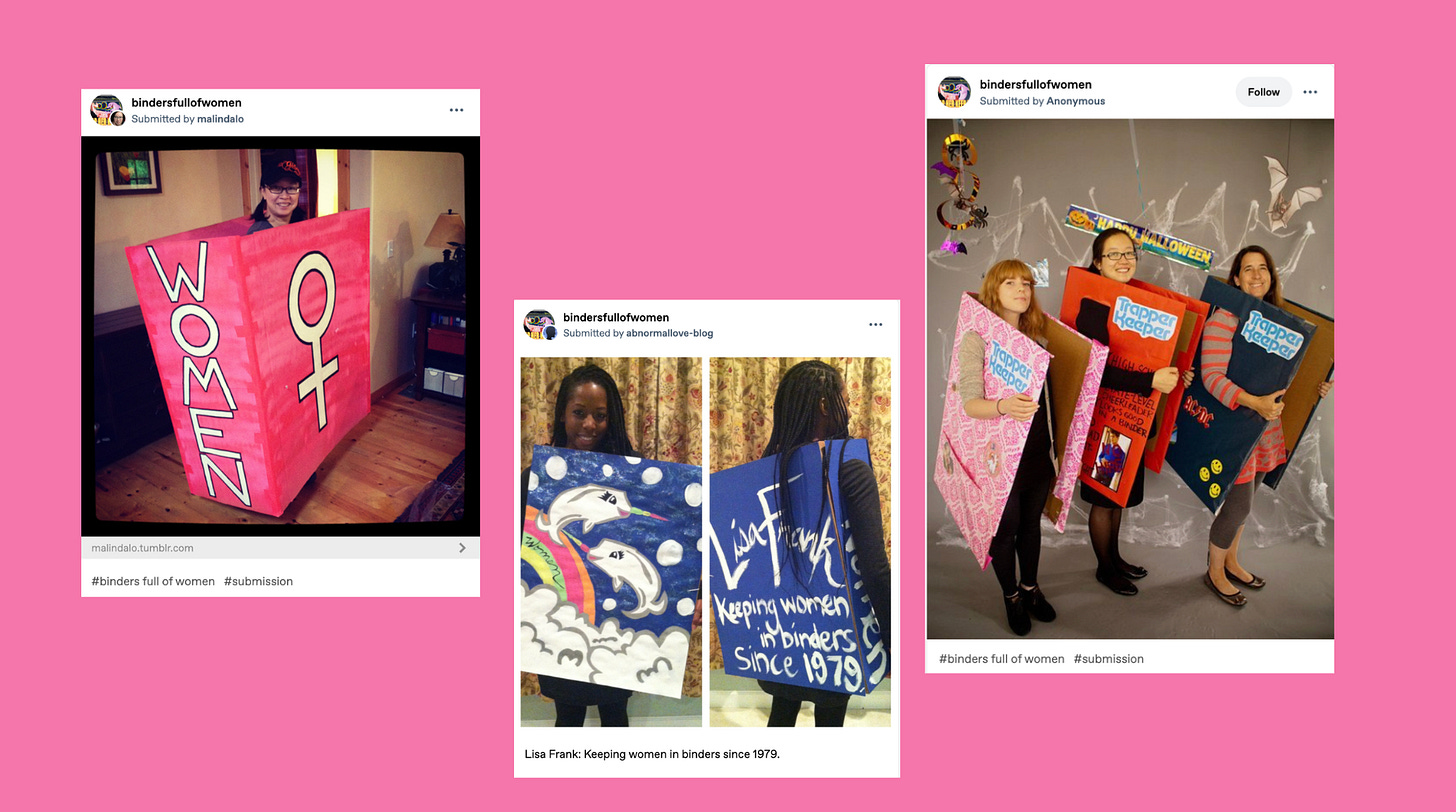
Women submitted images of their Halloween costumes to a Tumblr account run by Veronica de Souza. “Just as craft-cultures define a mode of cyberfeminist practice between online and offline spaces, embodying and sharing photos of the ‘Binders Full of Women’ meme also represent ways of doing feminism that break down on and offline distinction.”
Memes and the future of feminist media. The future of feminist media is uncertain, with many of the blogs of the 2000s and 2010s having shut down. In 2022, Bitch magazine, founded in 1996, stopped publishing. And in November, Condé Nast announced Teen Vogue would be folded back into Vogue. But there is hope! I’m really excited about the new publications and collectives that have arisen, many of which use memes and Instagram as a starting point, but also offer offline events, Substack newsletters, and print publications and zines. I used Daughter Zine, Material Grrrlz, and everyone is a girl itself as examples in my presentation, all of which I’ve previously reported on for PHONE TIME.
“I think sort of the most exciting thing about being alive right now is getting to speak with images in a way that I don’t think has ever really been done before, as casually, and memes are a part of that. I mean, if you’re going to talk about the contemporary experience of girls, meme culture has to be a part of that.
I think memes are beautiful. I love Sotce’s, particularly. I think what she’s done has kind of changed most of women’s interaction with this kind of media and putting themselves out there in this tweet format, but it’s paired with imagery.”
– Grace Anne McKean, founder and editor in chief of Daughter Zine
“As the memes were going on, I started talking about more of the political topics within fiber arts: sustainability, craft vs. fine art, things like that.
Now, I schedule daily posts, and I have built out a broader community. But it did all start with the meme page, because I was looking to connect with other Gen Z girls in their 20-something era.”
– Alexa Kari, founder of Material Grrrlz
“To me, it’s like an art project. It’s a performance project. I don’t think I would call it research, I think I would have trouble using that word. But we kind of parody, with love, a lot of pseudo-academic themes and ideas. Like the idea of having a symposium or the idea of making a publication, where everybody has biographies. At the same time, we’re also parodying a meme page. But then it also becomes something else, because everything is so theoretically linked.”
– Ester Freider, creator of everyone is a girl


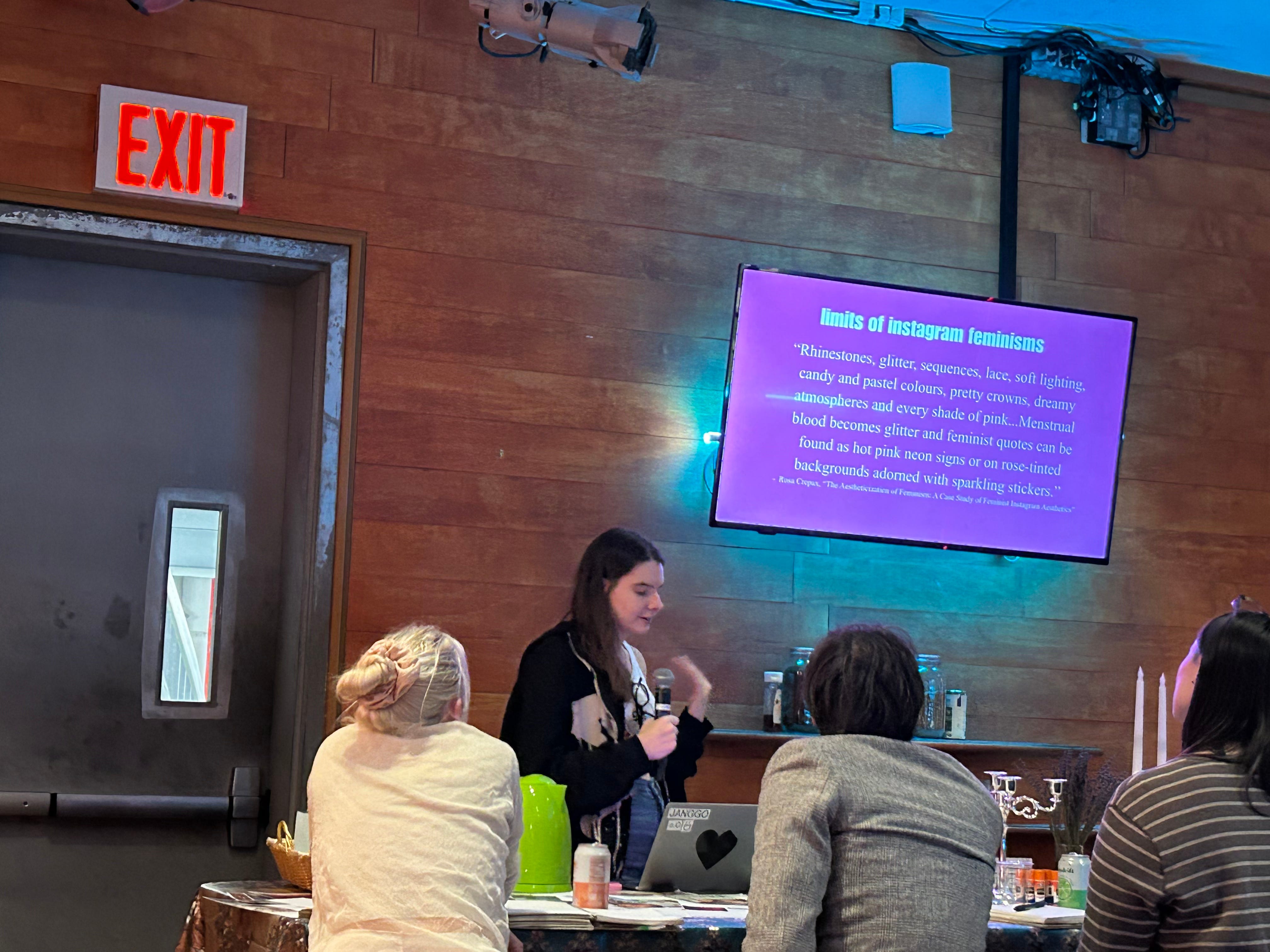
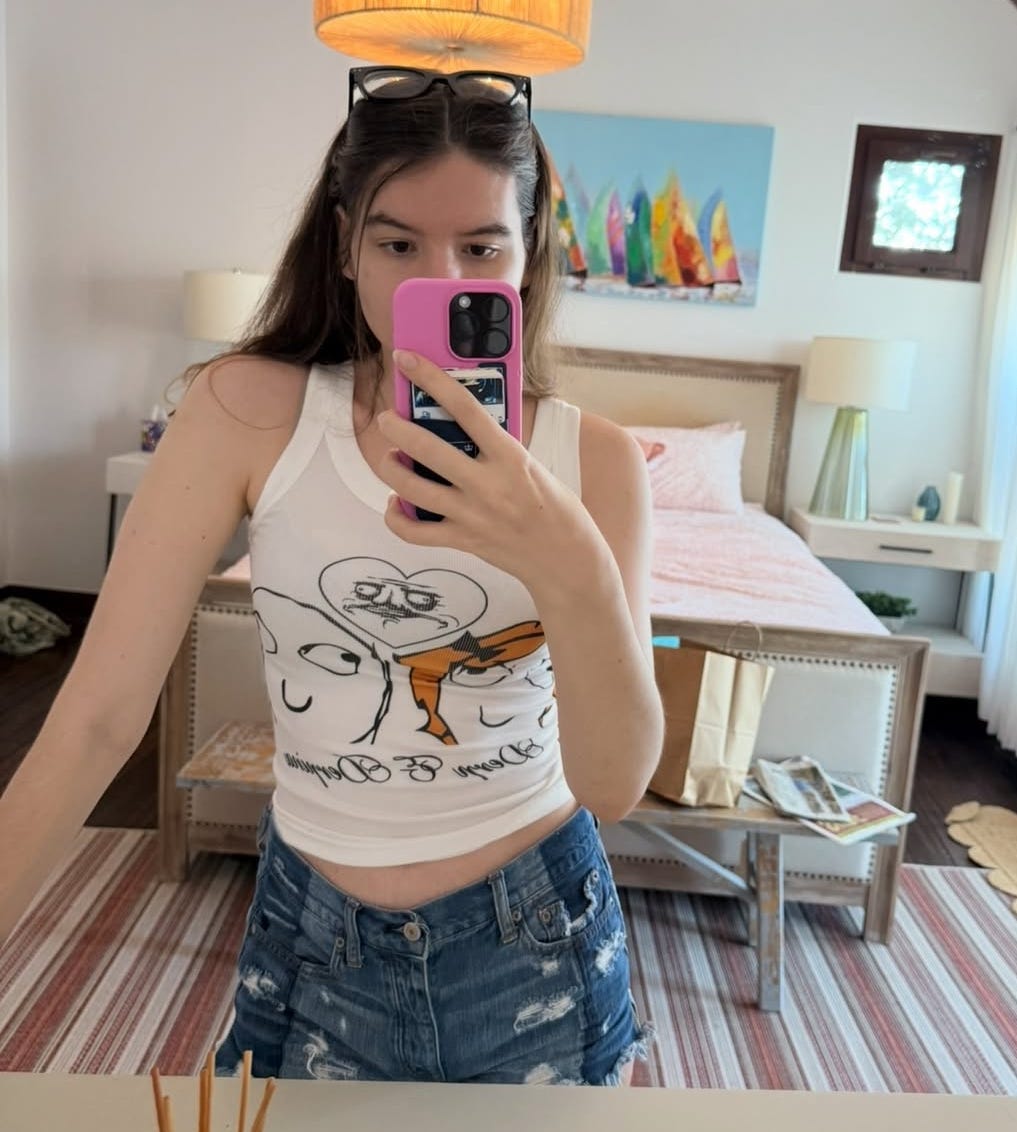
You can’t see it in that picture, but I was wearing my new Derp and Derpina shirt which I love very much.
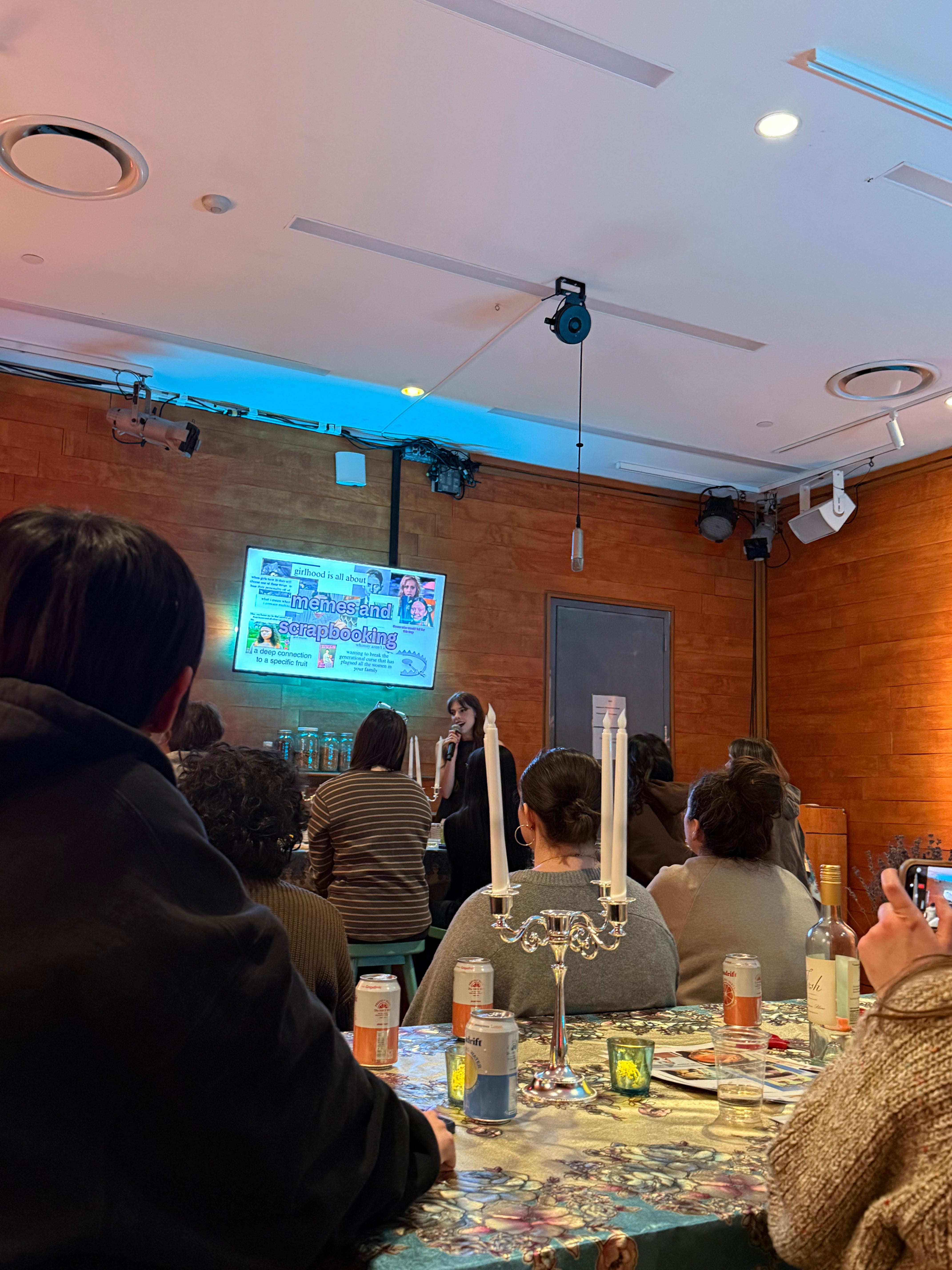
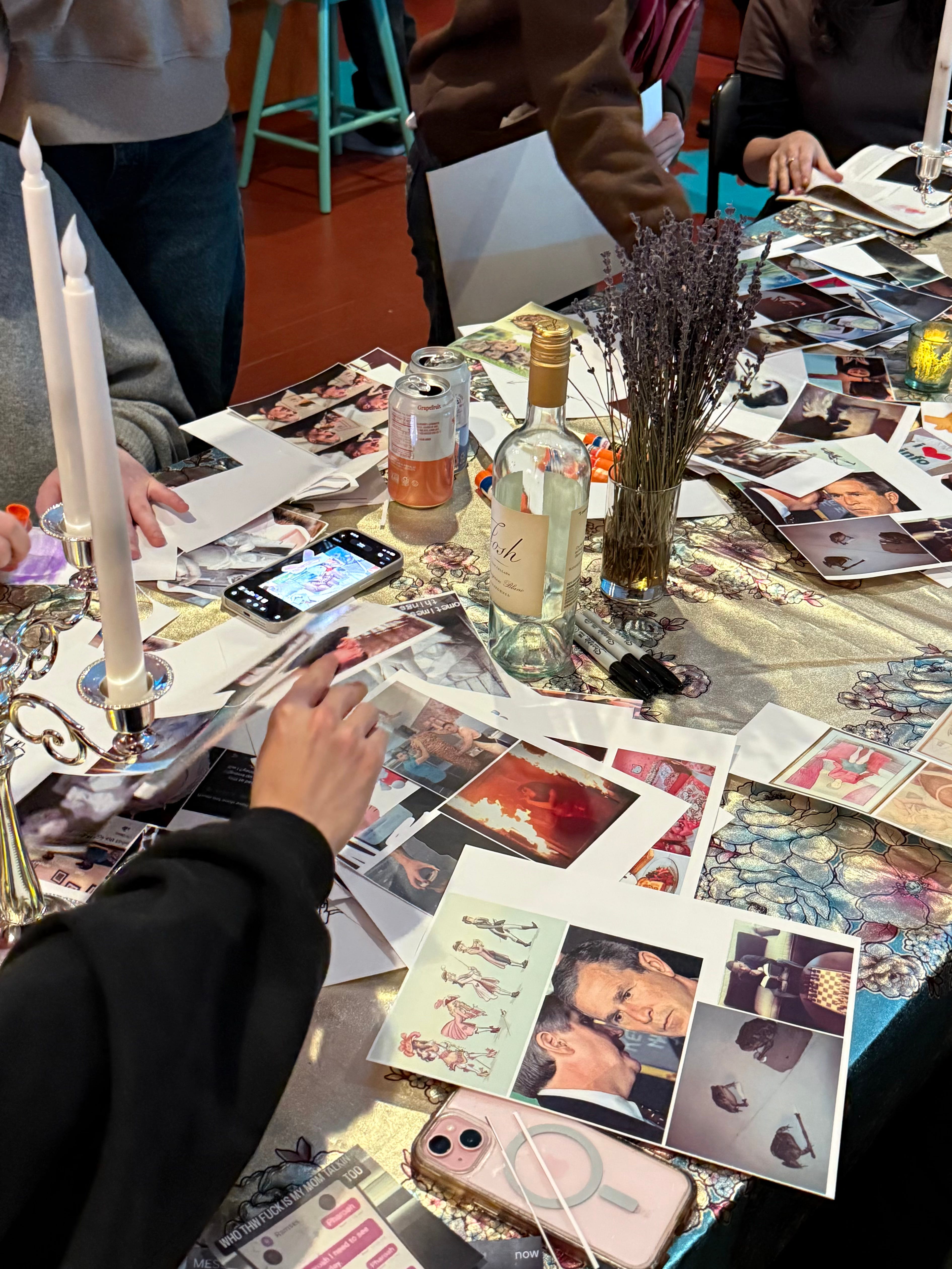
After we gave our talks, we made meme scrapbook pages. I’m very fascinated by bringing bits of the internet and online culture into the physical world, so this was so much fun for me.
Ester and Sophie did such an amazing job selecting memes as materials (there was also an abundance of Interview, Artforum, and other magazines). Sophie also scanned peoples’ scrapbook pages for an Instagram archive, and made an Are.na board with a plethora of readings on scrapbooking, collaging, and how we use ephemera to self-fashion.