


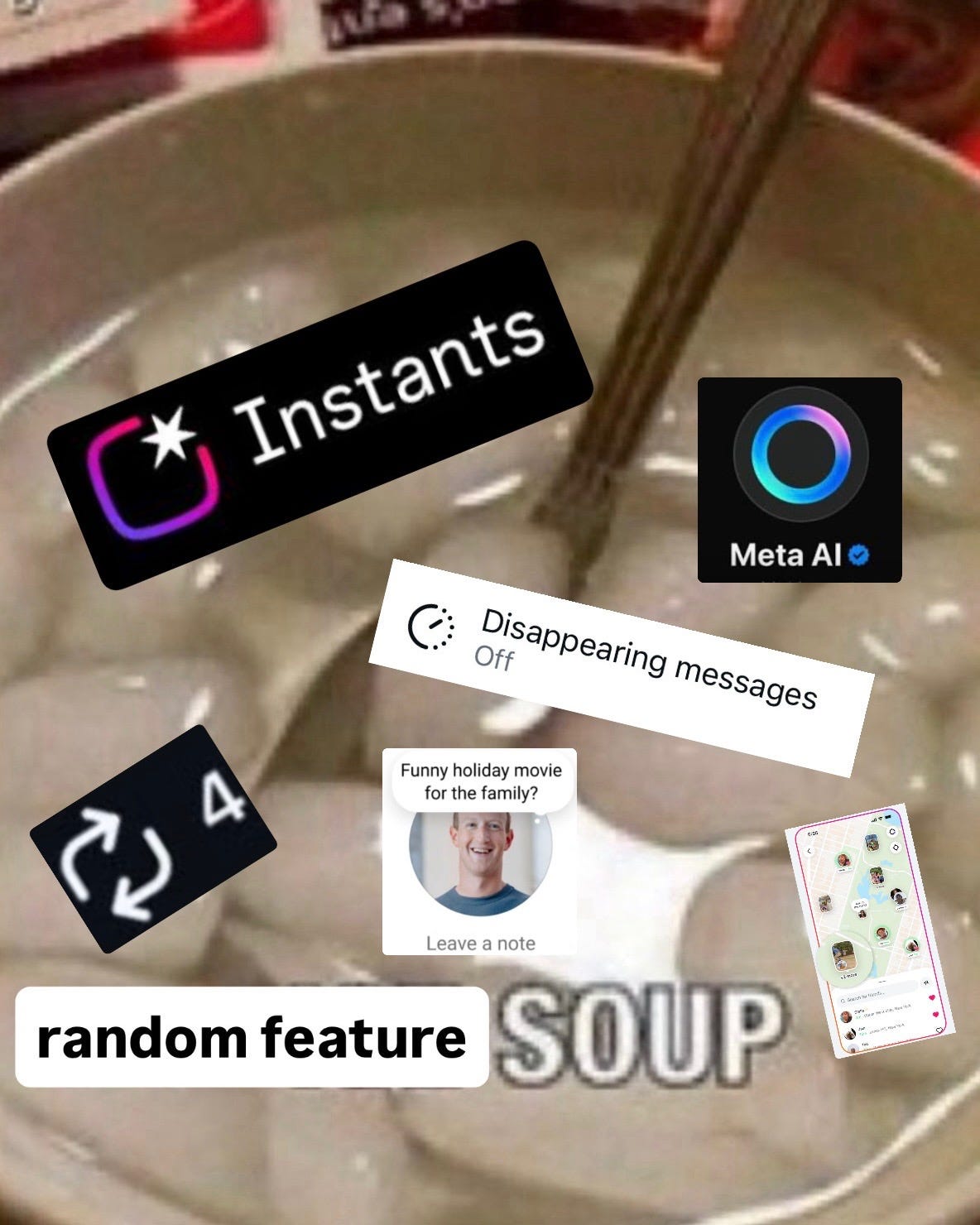
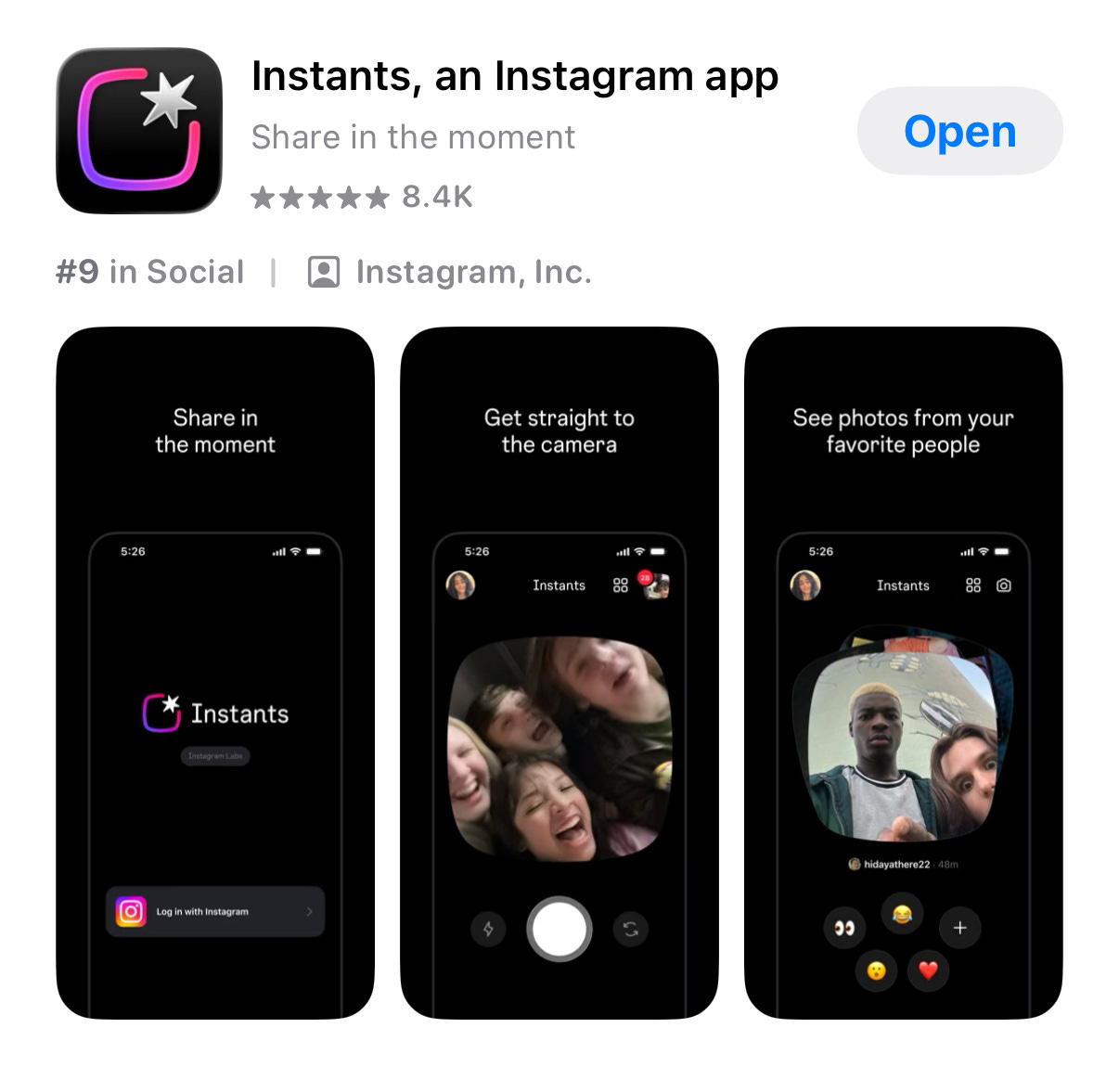
When Instagram released its “Instants” feature last month, I had one major thought: this looks familiar.
Instants, available both within Instagram and as a standalone app, lets you take quick photos throughout the day to send to your friends. You can see a library of your own Instants, but once you view others’ Instants, they are gone. The app’s been compared to BeReal and Snapchat, but I think it’s the most similar to Locket, with the exception that Locket lets you continue to view others’ photos.
I’d put Instants in the category of what I’ve started calling feature alphabet soup. Alternatively, throwing spaghetti at the wall.
Back in December, head of Instagram Adam Mosseri shared a carousel post detailing his thoughts on authenticity and the future of Instagram. From my newsletter on the post:
“‘Unless you are under 25, you probably think of Instagram as feed of square photos: polished makeup, skin smoothing, and beautiful landscapes. That feed is dead. People stopped sharing personal moments to feed years ago,’” Mosseri continues. In my experience as someone under 25, this is largely correct but also depends on whether someone uses the platform in connection with their work or larger personal brand. Some of my creator friends post Reels or on the feed nearly every day; many of the people I grew up with post on feed once a year or not at all. For the first group, personal and professional moments are all mixed together in one soup. And while it is true that the hyper-filtered, meticulously color-schemed feeds of years past are gone, new aesthetic languages associated with being hot, cool, and well-read have taken their place.”
As Instagram has embraced video, produced content rather than impromptu moments, algorithmic curation, and monetization, the app is also facing scrutiny from users who feel alienated. The result? It’s dug itself into a bit of a hole.
I think this tends to happen with apps that have grown beyond their original vision but in a kind of awkward way. What we tend to get is a miscellaneous soup: throw in a video feature here, an AI feature here, something alluding to “authentic moments” and “friends” here.
To me, the problem with Instants is that within the Instagram landscape itself, there’s already features that enable both ephemeral posting (Stories) and more tailored sharing (Close Friends). Many people also just create second accounts for photography, food, or more personal moments (and there’s even been a resurgence in celeb “finsta” accounts that really function as another channel for promotion).
Sure, Instants emphasizes in-the-moment sharing through a camera-forward interface, but as a feature within the Instagram universe, it’s not compelling enough to me to demand attention or implement a new habit.
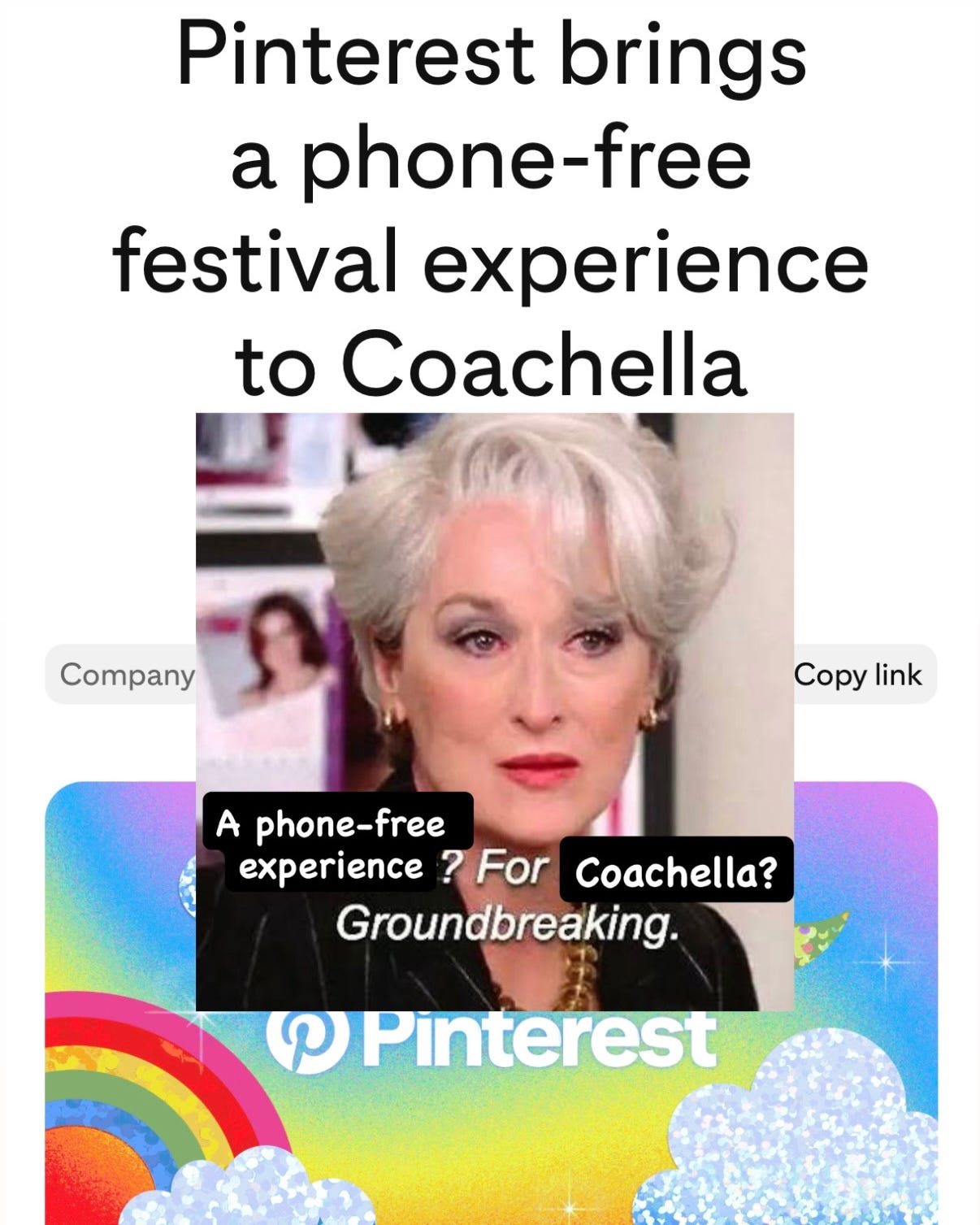
Instagram also partnered with Old Friend Photo Booth, which has previously gotten a lot of press coverage relating to analog and physical media trends, for the launch of Instants. Partiful, Co-Star, and Pinterest have done similar “offline” projects and I think we’ll continue to see social media platforms experiment here. (Of course, I’m always skeptical of “offline,” “analog,” and “IRL” experiences that are then served right back up as online content.)

This month, Instagram also launched the ability to reorder your grid. I wrote last summer about the evolution of the Instagram grid over the years, especially as the change to the aspect ratio (from 1:1 to 4:5) in 2025 made it so that less of your content was actually visible upon looking at someone’s profilee. Social media manager Bonnie Azoulay told me via email that she thought “aesthetics will always matter to an extent on Instagram.” More from that issue:
“Azoulay added that a nice-looking grid helps attract users who come across your account on Instagram’s Explore page, creating a good first impression. ‘You need a pretty grid or at least something that matches your brand identity (colors, fonts, etc.) when you’re trying to grow an audience,’ she said. ‘Those that have grown a following already don’t have to continue sticking to the grid aesthetic.’
She also drew a distinction between personal and brand accounts: ‘Personal brands and influencers can get away with not being aesthetically pleasing, whereas brands should stick to a brand identity with their grid.’”
And while the embrace of short-form video has encouraged creators to put out more content, often with less concern about how their grid actually looks, the grid is indeed still important. Maybe not just as a way to aesthetically document your nights out or Sunday brunches, but to build a creative or professional portfolio. From the @creators announcement:
“Your grid is often the first thing people see. Now you can curate it to reflect who you are right now, whether you’re setting the tone for your creative work, putting your top products on display or just making your profile feel more you.”
Maybe it’s my journalist brain speaking here (I often take advantage of Instagram’s default reverse chronological grid for research or to locate a specific piece of content), but I don’t love this change and think it interrupts a logic that’s been integral to the app for years (although to be certain, that central logic’s been eroding for a while).
And I almost forgot about Instagram Plus, a subscription-based “optional upgrade for people who want more,” also launched this month. The subscription includes features like the ability to preview stories, set your story to 48 hours, and post directly to your profile without it appearing on the feed. While I’m probably as close to an Instagram power user as there is and can actually see some utility in these features, I think these are mostly attempts to try and solve problems that Instagram’s own platform changes caused in the first place. For example, users’ desire to post directly to the grid is a response to the app’s increasing professionalization and emphasis on aesthetics rather than in-the-moment captures.
As the vision of apps like Instagram, X, and even Substack (Substack TV, anyone?) become muddled by additional features, I think there’s more room for apps with more clearly defined boundaries. I’m a huge fan of constraints, like Vine’s six-second limit, and think they are often more conducive to creativity than the ability to do anything, which can quickly become overwhelming and confusing. (Of course, these apps will likely also feel the tension between that vision and growth, as BeReal did.) When I interviewed Locket founder Matt Moss last year, we discussed this emergence of possibilities for new social platforms.
As for Instagram, the app is throwing things into the pit it’s desperately trying to dig itself out of.
As always, let me know if you have thoughts! Or if you think there’s something PHONE TIME should cover.
More on Instagram


“it’s not compelling enough to me to demand attention or implement a new habit” is such a good lens for critique of random ass features that feel additive without real usefulness or value for the people using it
INSTAGRAM PLUS IS A THING????