


From Erewhon smoothies to Gigi Hadid’s spicy vodka pasta recipe to a near-endless stream of “TikTok made me try it” foods (if you haven’t been paying attention this summer, you’ve missed dot cakes, espresso lemonade, soft serve margaritas, the chip bag sandwich, Kool-Aid pineapple, coconut water coffee, butter ice cream, and blueberry baked brie), our culinary experiences are increasingly mediated by celebrity brand campaigns, influencer-driven viral moments, and “reservation wars,” as food journalist Bettina Makalintal put it in Eater this July.
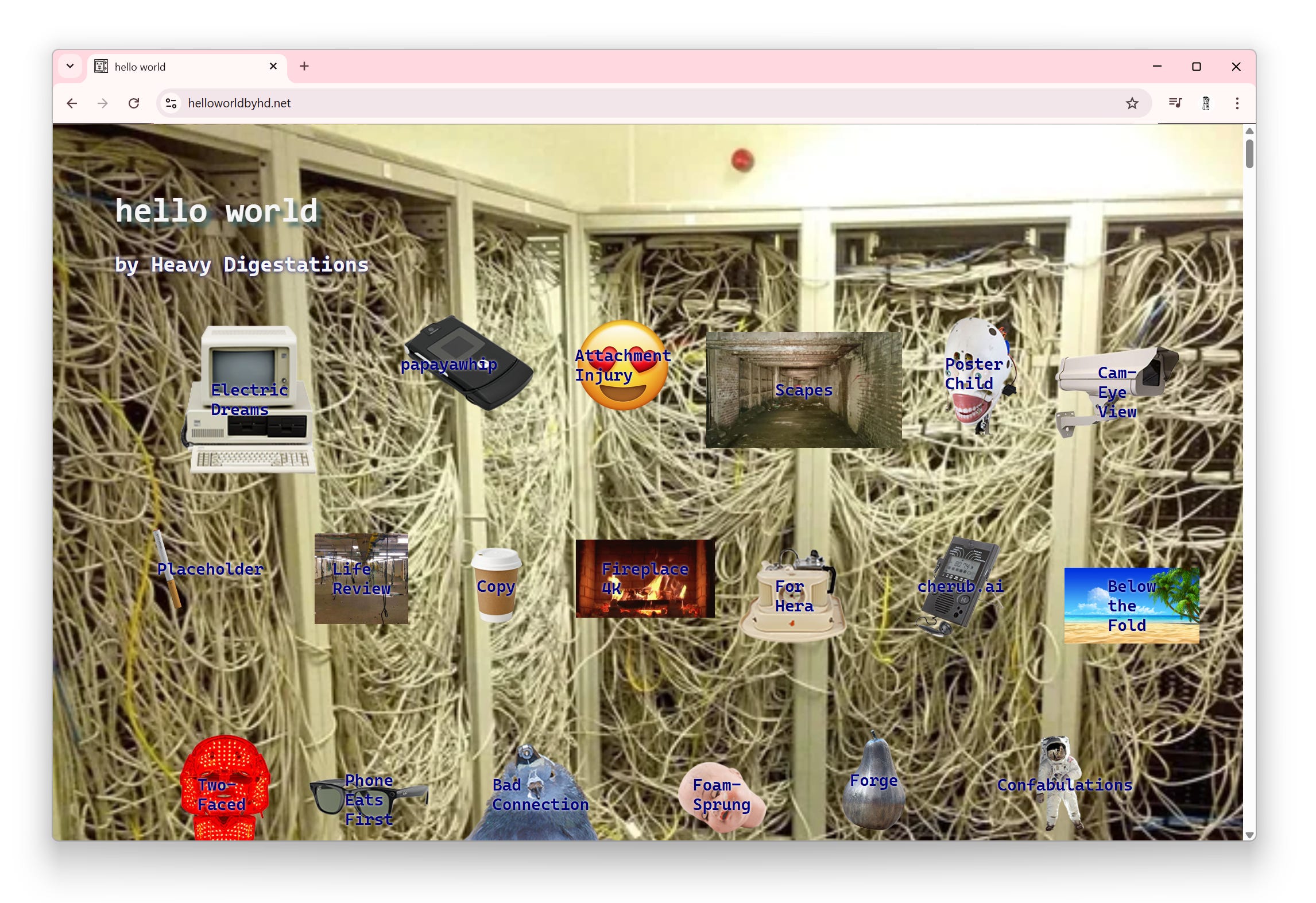
Researching, discussing, or even just consuming food outside of the Instagram world is difficult. Heavy Digestations, describing themselves as “a collaborative persona that acts as a digital and in-person avatar,” is trying. Through “diagrammatic poetry,” photography, performance, experimental writing, sketches, and most recently, a webpage poetry pamphlet titled “Hello World,” they explore everything from surveillance to food reviewing culture to the history of food imagery.
I asked Heavy Digestations about the pamphlet, which is influenced by early webzines and computing motifs like skeuomorphic design and blue hyperlinks, their other works, and how technology and food are intertwined.
Here’s our conversation, conducted via email and lightly edited for clarity (British spellings are kept!).
PHONE TIME: How would you describe the Heavy Digestations project (if that’s how you’d describe it)?
HEAVY DIGESTATIONS: Heavy Digestations is a collaborative persona that acts as a digital and in-person avatar. Because we are working with subjects of surveillance, censorship, performance of the self online, and consumption, we choose to work behind this constructed identity and see it as an extension of our art practice, another performance. As transdisciplinary artists, we traverse through mediums, bounce between fiction and reality, and work within the digital and physical.
We like the quote, “culino-philisophico-autobiographical,” and regularly borrow it to describe our practice. It’s from the book “The Debt to Pleasure” by John Lanchester, which we haven’t finished reading but felt like that bit properly encapsulated our motives and modes of research, and we like the way it sounds.
“The classic cookbook borrows features from the otherwise radically opposed genres of encyclopedia and confession. On the one hand the world categorized, diagnosed, defined, explained, alphabeticized; on the other the self laid bare, all quirks and anecdotes and personal history.
…
“But, as I say, this is not a conventional cookbook. The presiding spirit of this work, and the primary influence on it, is the nineteenth-century culino-philosophico-autobio-graphical volume “La Physiologie du Goût” by the judge, soldier, violinist, language teacher, gourmand and philosopher Jean-Anthelme Brillat-Savarin, who ranks with the Marquis de Sade as one of the two great oppositional minds of the period. ”
“Preface, Acknowledgement and a Note on Structure”
“The Debt to Pleasure,” John Lanchester
PHONE TIME: Your first (currently viewable) post on Instagram was in November 2022, captioned “Seafood boil.” How has the project evolved since this moment (especially from the photos of food to your more recent diagrammatic poetry, although you of course work across many formats)?
HEAVY DIGESTATIONS: When we started collaborating, our Instagram handle was Heavy (slang for very good) Scrans (slang for food or eating). It was a virtual performance that was carried out for about a year. We were using our genuine interest in how the internet is shaping our appetite and our roles as hospitality workers to create a food influencer avatar. It was part performance, part research project. The food influencer sphere was ripe for case studies about work culture, food systems, class, fetish, technology. We often provide ourselves with very specific and rigid structures to work within as we enjoy how they force creativity.
Without announcing the existence or end of a performance project, we silently archived the reviews or changed their captions to vague photo descriptions, as like, echos of a previous state which we suppose are an early foray into an exploration of peripherals. These transitory and liminal states of being are thereby treated as works in themselves, like how the decision to archive the project by stripping the material of its context while self-censoring by using Instagram’s archive function experiments with Instagram as an exhibition and temporal space.
With consumption in the context of social media at the centre of our work, whether that’s through research or using it as a medium, plus working within art organisations and kitchens, we became morbidly fascinated with the deterioration and reinvention of everyday communication. Looking at relationships with AI chat bots, work culture, bureaucratic and corporate systems at work within interpersonal relationships, and parasociality. Diagrams became a desirable form of communication that could condense, link, and visualise these ideas or concerns.
“The food influencer sphere was ripe for case studies about work culture, food systems, class, fetish, technology. We often provide ourselves with very specific and rigid structures to work within as we enjoy how they force creativity.”
PHONE TIME: You published the “Hello World” poetry pamphlet this spring and describe learning internet fundamentals like HTML and JavaScript for it. I’d love to hear a bit about what that process of learning was like. Why do you think it was important for the pamphlet to be in this format?
HEAVY DIGESTATIONS: It has been nearly a decade that one half of us has been making work about the internet, using Instagram to publish a research paper and as an exhibition/residency platform, creating digital collage and video with screenshots and free apps, and writing about how the internet affects our relationships with others and ourselves. Last year we applied for a research and development bursary to pay for access to FACT Liverpool’s Studio/Lab where we’d have access to software and technologies and a community of creatives working at the intersection of art and technology.
There was always this struggle between our attachment to writing as a medium and our desire to create visual art that never seemed to align in a way that was satisfactory, only coming together in glitchy and low-culture video. When learning about poetry, we enjoyed the similarities between poetic form and the medium being the message and in HTML, similarities between poetry and code, so it felt that writing the poetry pamphlet into existence via web development languages would work to deepen its meaning. The pamphlet is, boiled down, about the collapsing space between man and machine, the physical world and the digital. The pamphlet being half-code, half-human language felt like the optimal form to illustrate the content of the poems.
“There was always this struggle between our attachment to writing as a medium and our desire to create visual art that never seemed to align in a way that was satisfactory, only coming together in glitchy and low-culture video. When learning about poetry, we enjoyed the similarities between poetic form and the medium being the message and in HTML, similarities between poetry and code, so it felt that writing the poetry pamphlet into existence via web development languages would work to deepen its meaning.”
But we have not taken to HTML, CSS, and JS like a duck to water, that’s for sure. We barely passed Maths in high school so that aspect of coding humbles us regularly. It is very rewarding though, when you fix something that wasn’t working—the tinkering, the building—it’s really satisfying. We are starting from the bottom and only five months in so we look forward to seeing what kind of code we are writing or websites we are building in a year or five.
PHONE TIME: How did you think about blending the poetry (and text, more generally) with the visual elements? How did you choose the images, colors, and fonts you did?
HEAVY DIGESTATIONS: We were really interested in other examples of websites like the project we set out to make. So, when we went looking for some, we learned of early fanzines being pulpy science fiction and the early webzines like “monochrom” publishing work about art and technology. The history of zines informed our decision to make the website free to view. Thanks to hours of scrolling Neocities and exploring strangers’ websites, where we’d always come back to the sites that lean utterly into the fanzine approach, we adopted their approach to visualising an obsession in an obsessive manner. So we identified motifs and images in the poems and computing in general, and used them to build the website.
We leaned heavily into HTML’s default settings, skeuomorphisms, and generic indications of computing, such as using navy blue as a nod to hyperlinks, writing in Cascadia Code, using emojicombos.com for dinkus, turning the code for a horizontal rule written in Microsoft Word art into the hover cursor as an indicator of a page turn on a static page. The poems are positioned in the space where the physical and digital overlap, so we draw on some liminal spaces such as the server room as a backdrop, and poems with buttons made from found images of other liminal spaces like empty offices and computer screensavers. Using outdated mediums as tools within the pamphlet references digital sovereignty, nostalgia, and hauntology.
PHONE TIME: The experience of clicking through the pamphlet site is quite dynamic. I’m particularly interested in the words you chose to link out to other places on the web (“glocal” links to the Wikipedia page for glocalization, “Fantasy” links to the Britney Spears perfume, “glambot” links to a YouTube Shorts clip with Sydney Sweeney as the cover). Did you choose to link these out of utility (ie. to explain these terms to a reader) or for other Reasons?
HEAVY DIGESTATIONS: Our practice is research-based, which previously, for us, meant discovery through reading about history, literature, social sciences, technology, etc. It was gathering information about all the things that interest us, finding links, and weaving them together with our work. At some point, when learning about code, we realised we don’t want to only use it as a tool but to integrate it into the work, which has carried over to other pieces such as using footnotes to continue poems, orating code during performance work, allowing the rigid structures of code or social media platforms to intervene or shape the work, and using diagrams as visual poetry.
When learning about HTML, we learned of the ways information could be written into code that wouldn’t show on the website unless someone looked at the backend. We did want to write poems into the code so they could only be read this way, to discuss access and legibility by making some content, mainly poems about our interior worlds, available to few. Instead we went in the opposite direction, kind of inspired by our peers in intergenerational writing groups we attend, whose older members tended to ask about terms they aren’t familiar with. So it was a bit about making some of the work more accessible but also an opportunity to make the pamphlet more connected to the wider internet, offer context or alternative meaning, and to be silly.
PHONE TIME: In your post “Auntie Maureen’s Tomato Gravy,” you write the subheadline: “Let’s start with the recipe so you don’t have to scroll to the bottom should you attempt to follow it. I will share personal anecdotes about this family recipe afterward.” The format of a cooking blog with a recipe intro’d by an author’s personal stories has become something of a meme, and is perhaps just one way that the internet has shaped the way we write and document food. You’ve also written about food influencers, and “Hello World” explores this realm in poems like “For Hera” and “Phone Eats First.” Since starting the Heavy Digestations project, what do you think have been the most notable shifts in how we use technology to interact with food? What shifts do you think are underway, or will happen in the future?
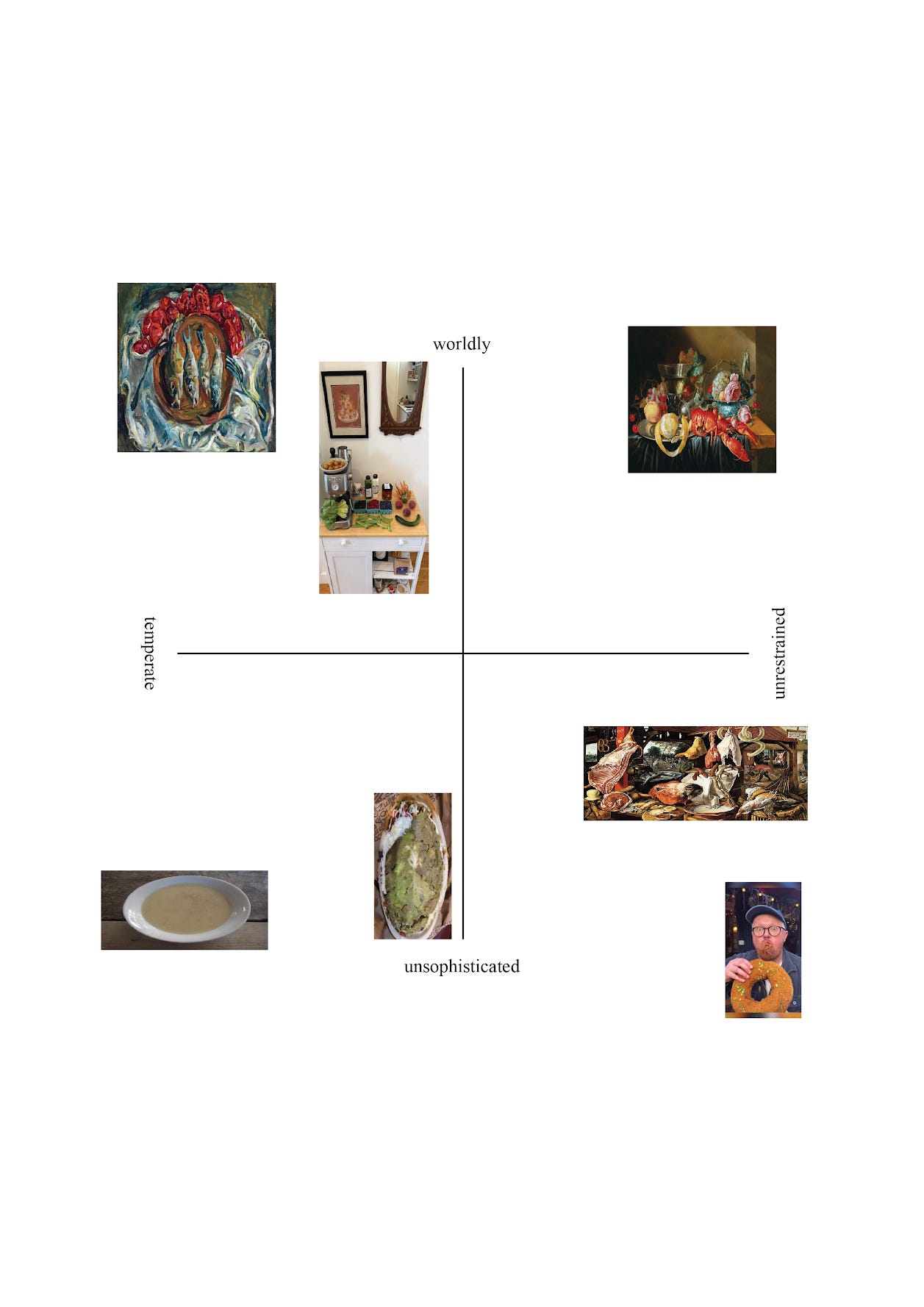
HEAVY DIGESTATIONS: We did a lot of research into 17th-century Dutch still-life painting at the transitional period between our food review performance and the poetics of eating. We were fascinated by the evolution of food imagery, like how still-life paintings displayed wealth and abundance by showing elaborate tables of expensive food and comparing that to what we think is the current iteration of this, the snackplate—a plate of various fine and colourful ingredients that do not mix. We found this simple comparison and new way of food-based image-making to be reflective of our current relationship with food and eating. Like, it’s probably gauche to not show restraint, instead of being well-fed, discipline is now a trait that is valued which also requires restraint. Wealth can be displayed not just monetarily but by worldliness and cultural capital via ingredients that are not easily accessible or divert from the culture the eater and most of their viewers belong to.
It’s evidence of a disembodied, de-eroticised, and individualistic society where feasts are confined to a single plate, cultural dishes are stripped of history and renamed to insist newness so it can become a trend, and food reviews are made in favour of the restaurant rather than the consumer. It also tells us of the impact our digital avatars are having on our relationship with our physical bodies through preoccupations with gut health, protein, and weight loss content. At the same time, mukbangs are getting more pornographic, and restaurants are using mukbang content as the format for their marketing by sloshing thick sauces over everything.
[PHONE TIME interjection: I’m reminded of the “cheese pull.” It’s not new to the social media era (In 2016, Sarah Jampel wrote in 2016 about the cheese pull in food styling and photography), but has become hallmark of 2020s content such as TikTok food reviews. “Cheese pull” now has entries on both Wikipedia and Merriam-Webster. Chain restaurants like Chili’s have embraced the cheese pull as a way to boost sales, Jaclyn Diaz and Alana Wise reported for NPR last year.]
“It’s evidence of a disembodied, de-eroticised, and individualistic society where feasts are confined to a single plate, cultural dishes are stripped of history and renamed to insist newness so it can become a trend, and food reviews are made in favour of the restaurant rather than the consumer.”
Even when we act in defiance of this, try to build community, and project authenticity, the curation and construction of identity cannot be escaped. We saw a restaurant post a photo of text written in Sharpie on a metal kitchen bench that said something about not wanting to post Reels because for them it’s about the food. It’s like how photo dumps were supposed to display a disinterest in the overly curated landscape of Instagram but are in themselves curated to be signals of a self they wish to project. We would be glad to see the end of restaurants creating skits or using their minimum wage staff to star in their content, but that text post just felt like another stop on the infinite loop of what is IN and what is OUT. Online it’s a bit more about cool factor than affluence, so if enough people partake, there will be a revolt against it, and a new thing set to go out of style.
PHONE TIME: You also write about diagrammatic poetry: “Diagrams are esoteric. To the unscientific and unmathematic, the diagram is magic...Diagrams are mundane. Sometimes they are impenetrable, read by darting eyes scanning the screen bottom to top, right to left, rather than up and down.” What does the diagrammatic format offer that a traditional poem doesn’t? How do you think about legibility in your work (is it a consideration, especially as the format of a social media post can tend to flatten artistic work and complexity)?
HEAVY DIGESTATIONS: The diagrammatic format in our work is an evolution of our research and interest in peripherals. When thinking about merging our research with our output, our writing with our visual work, we started borrowing shapes and structures from computing, memes, and alchemy and mysticism to communicate links we have discovered between our current digital world with our physical and spiritual past.
Layering them with ASCII and old graphics we would’ve used on our Piczo site or Myspace profile sourced from sites like glitter-graphics.com allows us to use symbolism but also context to apply meaning to the words that name pretty abstract ideas or concepts alone. The poems are able to exist between different mediums—digital, drawing, writing, research—which is incredibly satisfying as interdisciplinary artists.
Dualism is a through line in our practice—man and machine, earnestness and irony, good and evil, erotic and pornographic—so we create these speculative sacred objects that evolved from spiritual and religious applications of tech, divine machinery, AI and the sublime, and reading “The Pearly Gates of Cyberspace” by Margaret Wertheim. It got us thinking about medieval ideology, eschatology, and a possibly pending dark age.
We like to layer up meaning wherever possible, whether it’s through word play or reappropriation. On the surface, we know our diagrammatic poetry is convoluted and the meaning not always immediately accessible. But we feel it’s important to create work that requires the audience to spend time with it, to read and reread it, for it to be something they can return to and find new meaning in. Even posting it on Instagram works against that way of consuming art.
PHONE TIME: Anything you want to share about future directions, either with “Hello World” or the project as a whole?
HEAVY DIGESTATIONS: We are in the process of collaborating with a writer on their debut poetry pamphlet, creating the website based on the content of her writing. Collaboration with other writers will be the continuation of this poetry pamphlet project, which was always intended to become a digital press for experimental writing by marginalised writers.
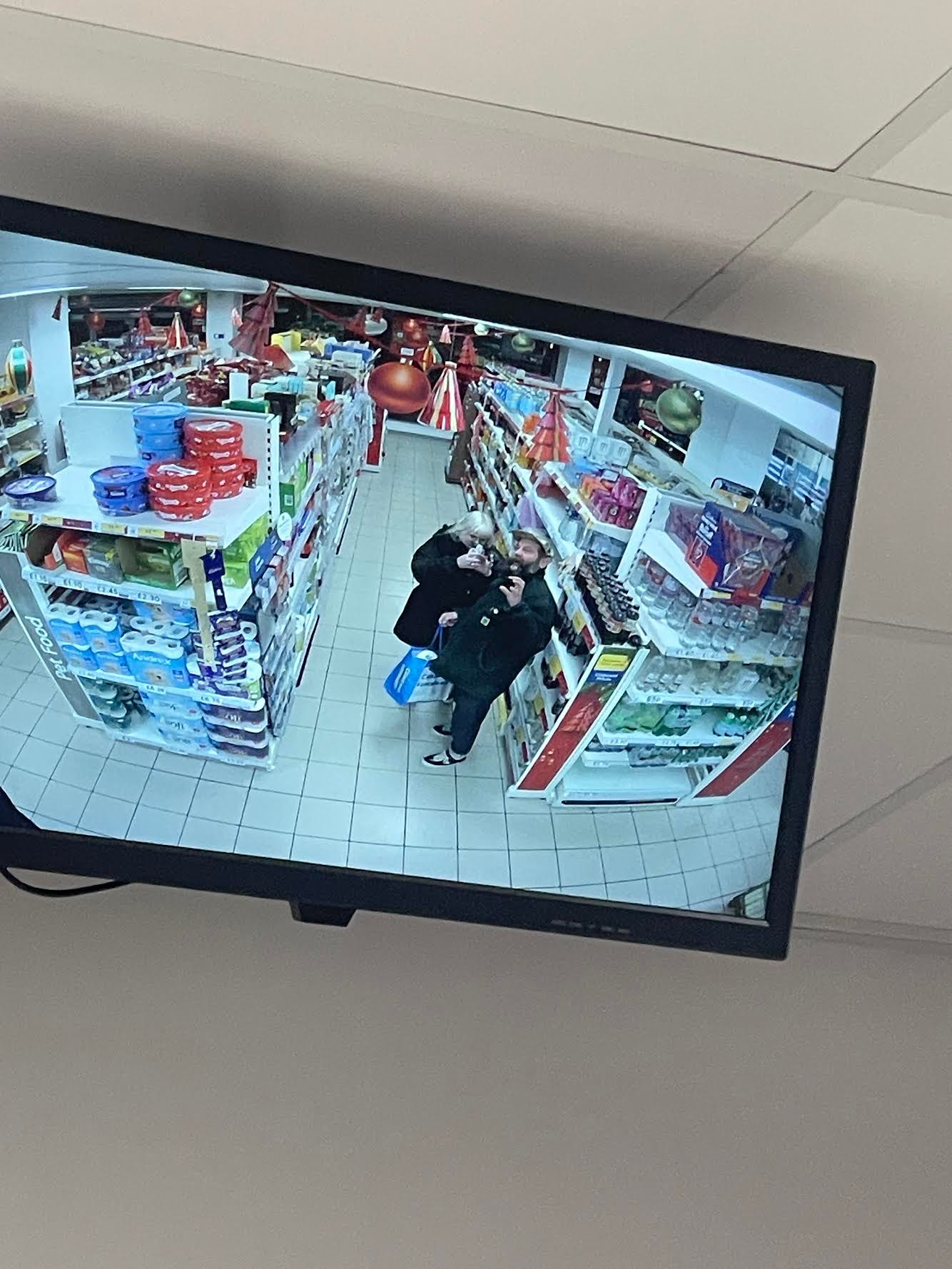
As for Heavy Digestations, we are working on in-person performance work and video, using mask-making as IRL avatar-building. This is, as of now, an exploration of fursuits as anti-surveillance tools, eroticism, and censorship. We are interested in creating work about the internet that cannot be viewed on certain platforms due to community guidelines and toying with those tensions.
Being on R&D this year means we have space and resources for experimentation, so we expect to dabble in other mediums such as game design, virtual reality, and 3D computer graphics while developing our coding skills to create more dynamic and layered diagrammatic poetry.