


Lucia Gallipoli is a textile artist, writer, and poet based in New York. Her work touches on themes including girlhood, religion, digital culture, and ephemerality. It’s cozy, confessional, and inviting—but not at all frivolous. She completed a self-directed bachelor’s degree in love at New York University’s Gallatin School of Individualized Study, and is currently finishing an MFA at the School of Visual Arts.
“I exist both online and in my fantasy world where everything is soft and I hope my art relays where I live and who’s inside decorating,” Gallipoli describes in her artist statement.
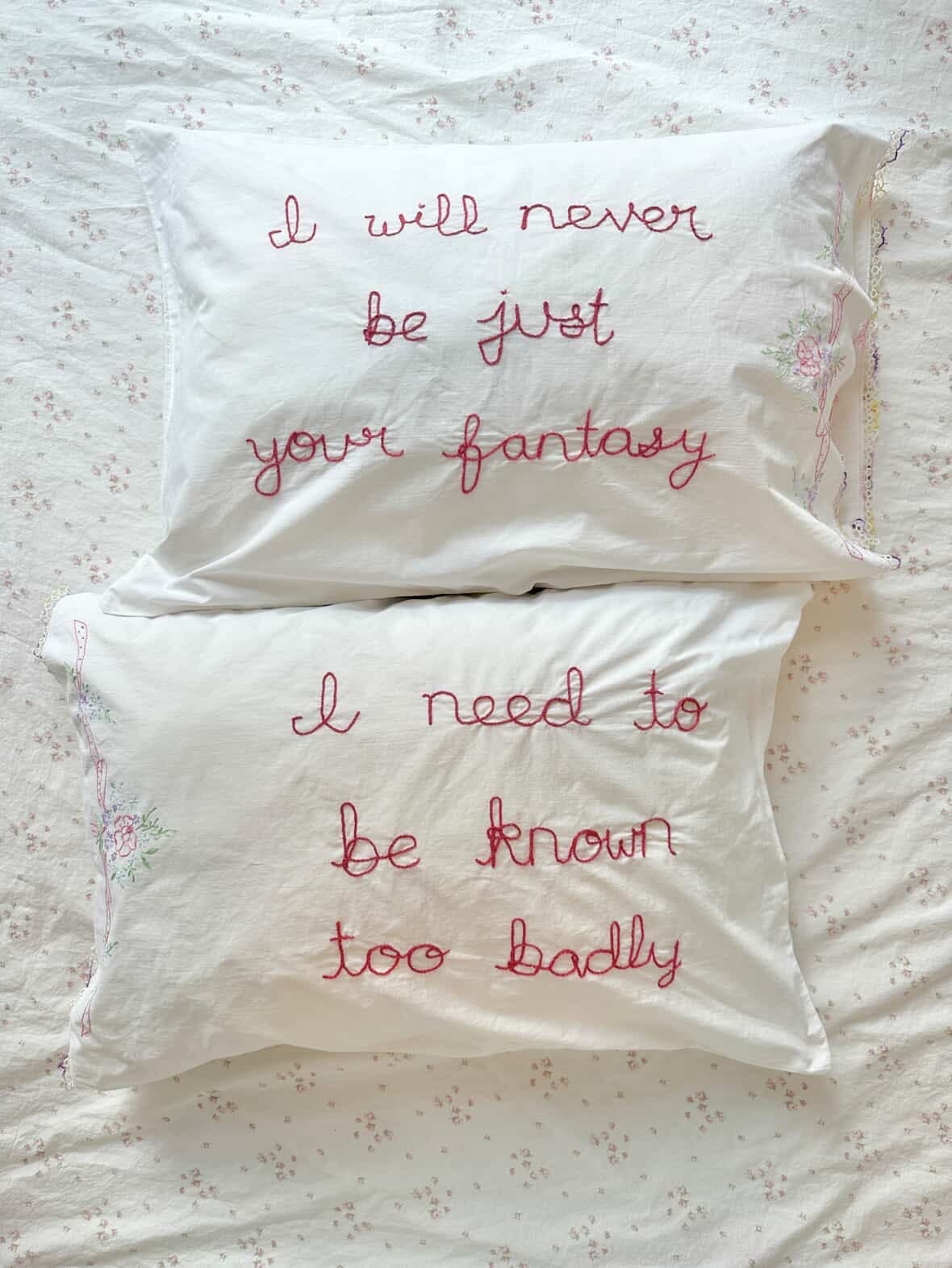
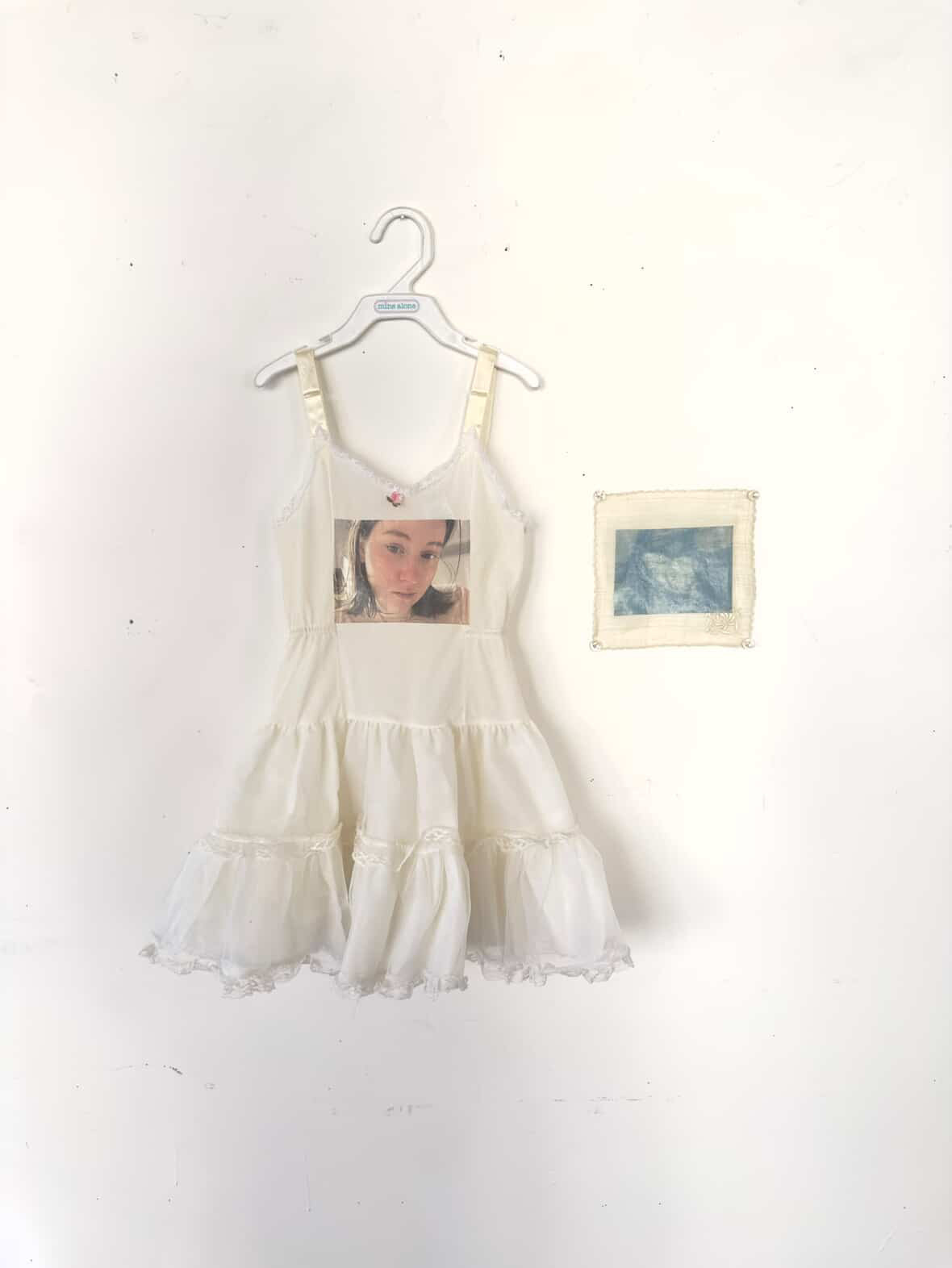
She began working as an artist painting still lifes and then started painting textiles. “Because I work with basically only secondhand fabric, I feel like I get to play off of the patterns and motifs that are in fabrics that kind of come with their own baggage,” she told me. “It’s so warm on a tactile level, it’s really soft and gentle. I kind of want to subvert the aesthetic sweetness.”
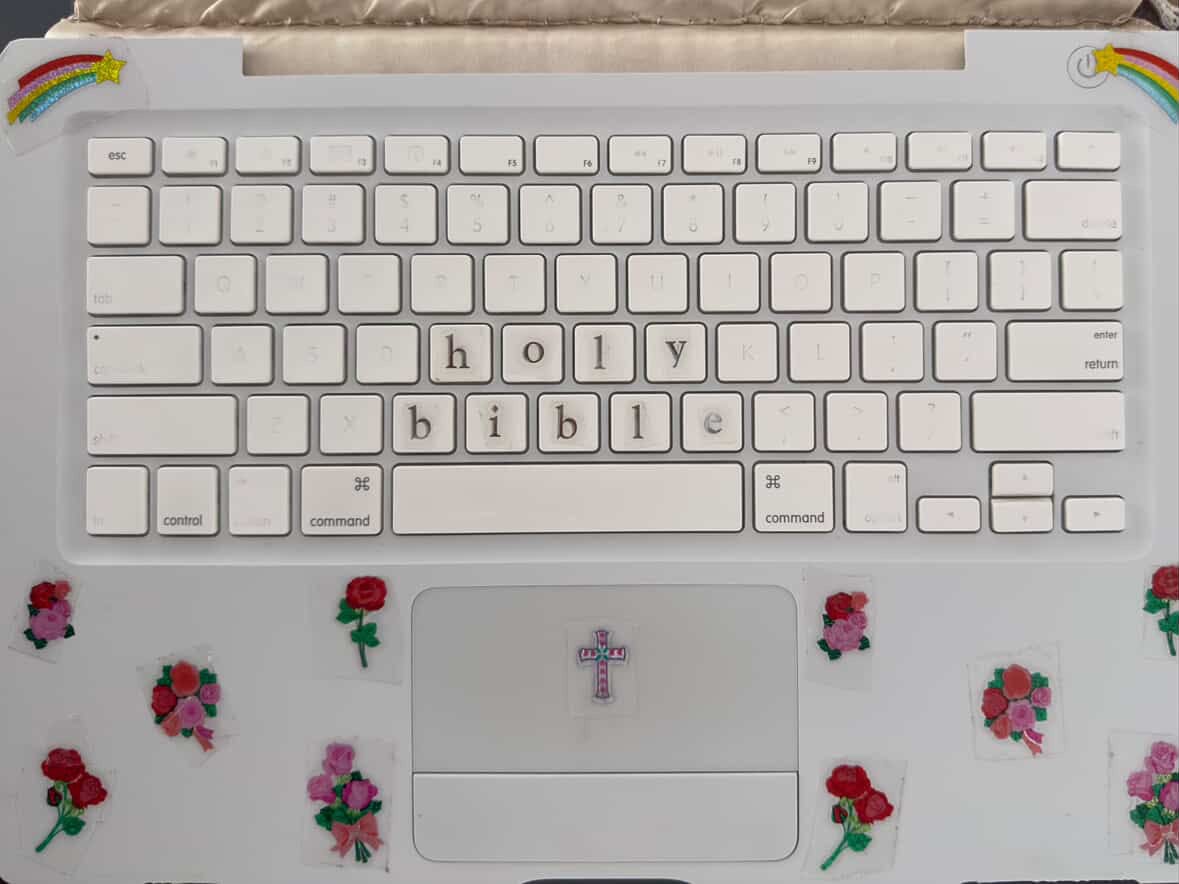
She also looks to her own digital archive for ideas, frequently combing through her screenshots and the contents of her Notes app. Her work makes the often airy digital aether tangible. In one piece, “I Don’t Need God to Tell Me What’s Good (my lore is like the bible to me),” Gallipoli constructs a physical Bible using iron-on transfer photos of digital and physical ephemera, fabric, stickers, felt, and part of a MacBook case. The piece also includes an old Nokia phone and wooden gossip table.
Below follows my conversation with Gallipoli, edited for length and clarity.
PHONE TIME: How do you get an idea for a piece? What’s the process of making it come to life?
LUCIA GALLIPOLI: I honestly should figure out the answer because I’m like, “Oh my god, I would love to have another idea.” Currently, I’m out. But I have kind of a running list on my Notes app. I should be making time to sit down and write. I was writing poetry for a while—I’ve been published a few times—but I feel like I don’t have as much of a writing practice anymore in a strict or even regular way.
I’ll come up with a list of ideas, and then I don’t know how to judge things right after I write them. So I usually wait a few months, and then I come back and look at the ideas that I’ve written and see if any of them seem not corny. Because sometimes I’ll write something and I’m like “Whoa.” And then I’m like, “Every person on Earth has had this thought.” Not that I think I’m particularly innovative—I feel like some of my most successful pieces are just because everyone feels that but hasn’t articulated it quite the same way.
I make a regular habit of going thrifting to find fabric. I also draw a lot from my camera roll. I’ll go back through my camera roll all the time, and I’ll make folders of potential background imagery for a tapestry. It’s a lot of piecing together. I look at my phone all the time—really my art practice is like 50% me looking through my phone and just looking at different files and being like, “How could all this work together?”
PHONE TIME: I love that. I do the same thing! Because on your phone you have so many things that you kind of forget about. Then you come back, and they can be raw materials for a different idea. I loved the bible of your lore that you made. How did that come together? How did you think about incorporating textiles?
GALLIPOLI: This is another thing of me going through my camera roll. I happen to have kept all of my old iPhones. I was going through them, which was really exciting to me, because I reread my diaries all the time. And there’s nothing new, obviously, because it’s all old stuff. But I kind of like it as a way to research.
A lot of the time, if I’m feeling uninspired, I’ll try to revisit an emotion where I felt very strongly about something and then try to reconnect with that. Often it is a point when I felt heartbroken, just because it’s such a jarring and intense emotion to feel just so devastated for—by the way, over basically nothing in my case, largely.
I came up with the idea for the bible because an instructor at my school asked me if I was theological at all. In the way that he said it, I feel like he was testing whether or not I knew what that meant. I wanted to be like “I fucking know what that meant,” but I was like, “No, I’m not really religious at all.” And I started thinking about it, and it kind of annoyed me. I was walking around, as you do in New York, just speed walking down the sidewalk. I was like, “I don’t need God to tell me what’s good. My lore is like, the Bible to me.”
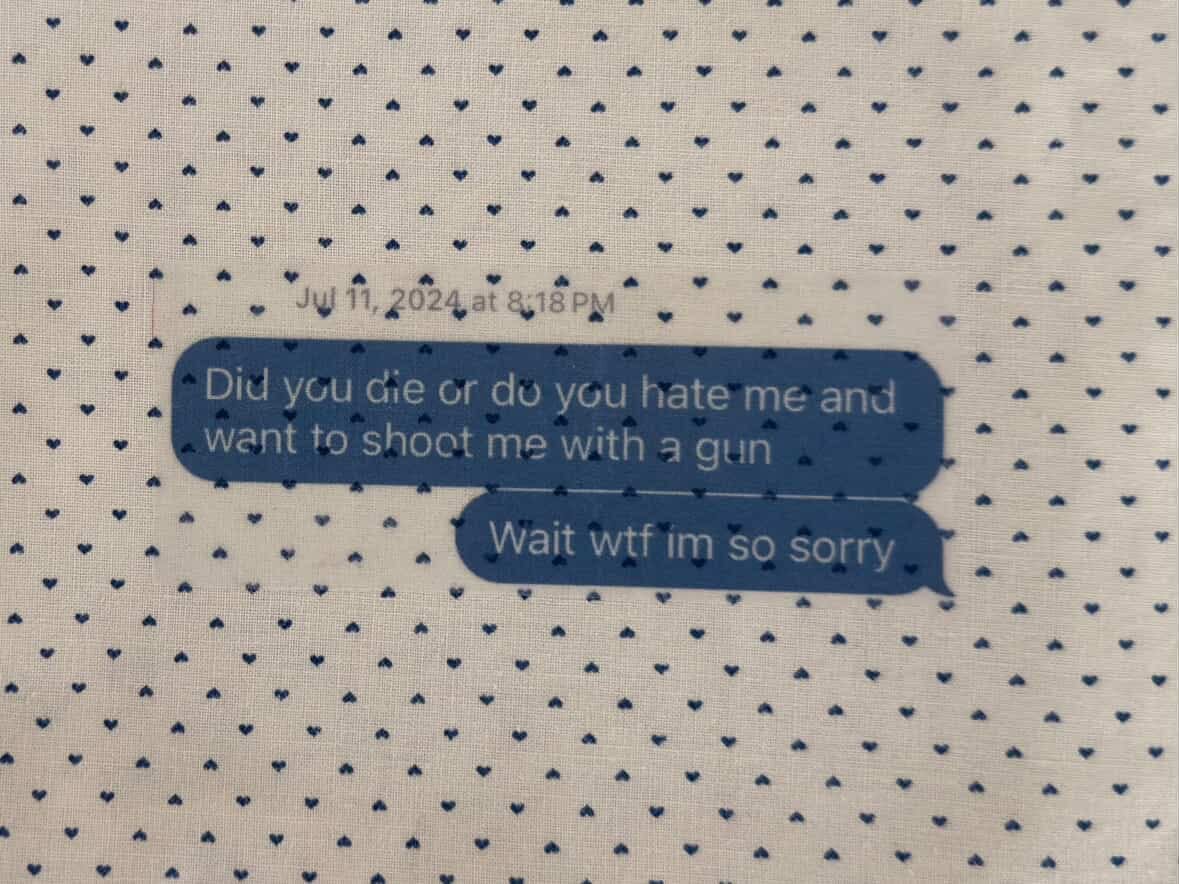
And I was like, “Oh, that’s an art piece. Now I have to find my lore. Because who’s to say what that is?” I made a Google Drive folder of just anything that could have been in the bible, and then I just narrowed it down. Some of it was also like, I wanted to overshare, but not in a way that was for shock value. I posted on finsta like three times a day for years, and to the point where I’m like, “I can’t believe I still have friends.” Because it would be like “This person isn’t texting me back,” and then 30 minutes later, “He texted me back. Oh my God.” I look back and they were engaging with me and supporting me in such a way; I’m so grateful. I did include some of that in the bible. But some of it I was like, this doesn’t need to be in it.
PHONE TIME: I do a lot of finsta posting myself! How do you think about sharing your work on social media? Does that change the way you make or perceive it?
GALLIPOLI: I grew up on Tumblr. I feel like a lot of people will describe confessional art as like “Tumblr art,” as if its a pejorative. And I want to be like, “No, I love Tumblr art. That shit’s awesome. It made me who I am.” I don’t mind if my art is a little internet-y. I try to lean into it a little bit, because I have a deep respect for art online, and in particular, the kind of art that resonates with teenage girls online, just because I feel like it impacted me so much growing up. When you’re 16, kind of around that age, at least for me, I felt very unseen by what I was seeing in my actual real life. But I feel like what I saw online made me feel less insane about things I was feeling and experiencing.
I know I have to engage with the algorithm in a certain way—it’s a humiliating kind of song and dance. Because if you use any hashtags at all, it’s like, well, you’re obviously trying to hit a certain way. So it’s kind of embarrassing to be seen trying. But I’m also like, this is social media. Unless you have a private account, you’re not posting just for you. You’re automatically wanting other people to see what you’re posting.
PHONE TIME: How has your practice changed or evolved over time?
GALLIPOLI: I guess one way would be the actual use of textiles. For a while I was just painting the texture of them, and then I realized I could use them.
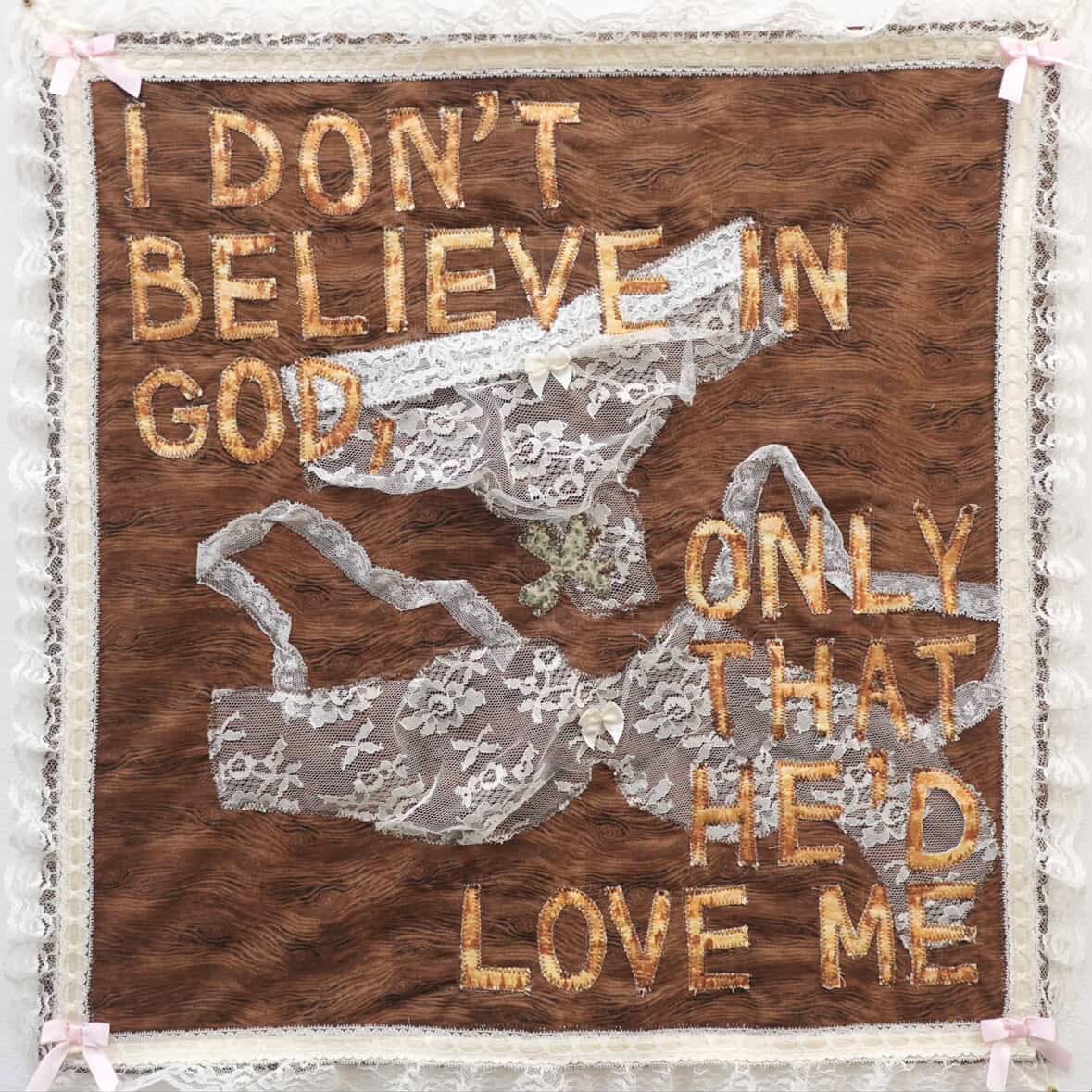
I kind of want my art to be navelgaze-y still, in like a confessional way. But I feel like I was putting a lot of emphasis on deifying past romantic partners. And then I was like, “Wait, that person was literally just like a normal person.” I made a piece, “I Used to Pray,” that reads “But God wouldn’t be 5’8".” I was realizing I was deifying this person. Then it hit me, the obvious realization—wait, that person wasn’t God. They were nose to nose to me. They were just in a human body. They have auto caps disabled on their phone.
So I’m also examining my relationship to religion slash lack thereof. I kind of want it to be an earnest inquiry. One of my instructors recently described it as earnest. I wanted to be like, “It has to be earnest. I don’t know anything about it. It just has to be.”
I’m kind of hoping to keep evolving thematically. I’ve made a lot of art about heartbreak. I feel like I’ll always return to that, just because I like consuming art about heartbreak. I’ve been in a relationship now for almost seven years. People also comment on my Instagram sometimes like, “You should just get a boyfriend.” I want to be like, “I have one. We live together. We have a cat. We’ve been dating for more than half a decade, I’m fine.”
PHONE TIME: What do you envision for the future of your work, in the short and long term?
GALLIPOLI: My short term goal is just to keep working. I also randomly want to learn how to sew clothing, because I’m kind of entirely self-taught. Right now I upcycle a lot of clothing, and I would say it looks pretty neat, but I know that I’m not doing everything totally correctly. I feel like learning how to sew better will make my art better, because everything will look neater.
I’m gonna get a studio, which is exciting because I have a studio at school right now, but I’m gonna need to get one for after. I live in a one bedroom, and especially because I work with textiles, our cat would just mangle everything.
My long term biggest dream would be—this is so boring and I guess pragmatic—but I would want to be a full time artist, like not having a different job. It would be nice to be supported by my art at some point. I just want to keep reaching people whether or not they like my art.
“Sometimes I gaze so far up my navel that I almost see god. I assume he’d just tell me to keep making my tender-hearted girl art. I don’t know, I just really love love.” — Lucia Gallipoli, artist statement
You can find Lucia Gallipoli’s work on Instagram and her website, where she also sells originals and prints of her work.