Happy New Year. Today’s issue of PHONE TIME includes: a review of the NYU ITP/IMA Winter Show 2025. Plus, revisiting my issue on offline→online content.

New York University’s ITP/IMA Winter Show 2025 was Dec. 14 and 15. Those acronyms stand for Interactive Telecommunications Program and Interactive Media Arts, graduate and undergraduate programs, respectively. The show spanned two floors of software, hardware, sound, projections, tactile experiences, living plants, and more. I’d previously gone to a show of ITP thesis projects at NYC Resistor earlier this year, but this was on an entirely different scale.
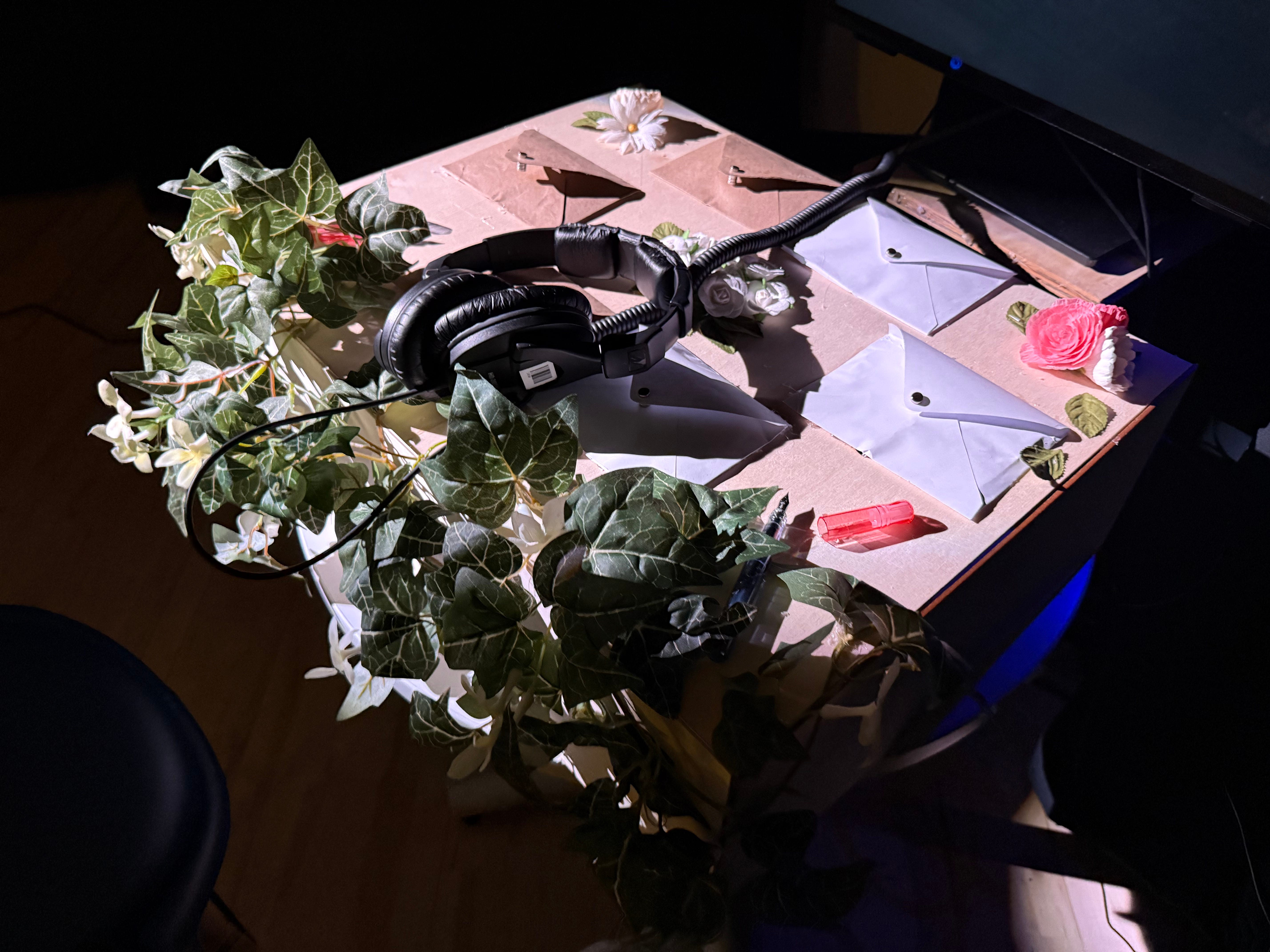
Tech can feel static, boring, and removed. That was not the case here. I got to use all my five senses—even taste! The installations were both technically impressive and conceptually expansive, touching on a variety of themes: growth, bodily autonomy, relationships, advertising, uncertainty, labor, craft, nature, authorship, and more.
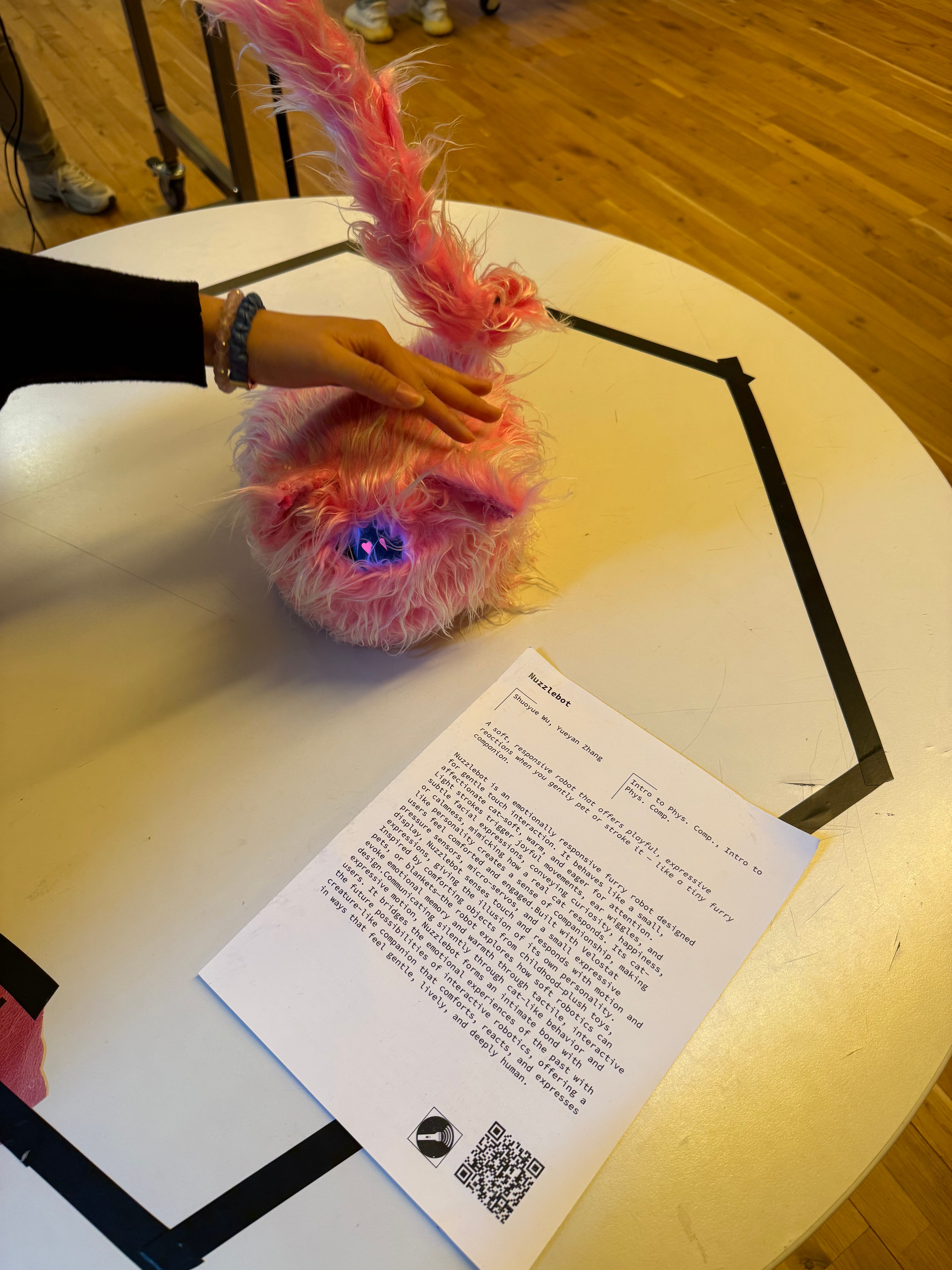
One of my favorite works was “Nuzzlebot” by Shuoyue Wu and Yueyan Zhang. The pink furry robot is designed to behave like a real cat. Pet it softly and it would purr, poke it and it might get angry.
“Δrtificial Life” by Chuan Tsai was also quite fun to interact with. The work consists of physical 3D animal models, which you can throw into a miniature trash chute. When you do, a screen shows a corresponding digital model of the object falling into the growing pile. “In the digital age, we generate, discard, and update endlessly. Countless AI-generated images, models, and concepts are deemed useless or ‘not good enough,’ thrown instantly into the recycle bin or unseen depths of data storage,” Tsai’s description states.
Other works required you to move your body to interact with them. In At the Tip of Bloom by Crystal Zhao, flowers bloom as you move your hand in front of a webcam. In Pulse by Alyssa Li, a mirror with colored lights responds to your movements.


Kinetic Randomness Generator .5 by Cody Frost requires you to turn a wheel, causing small geometric figures to fall and reconnect with each other in endless combinations.

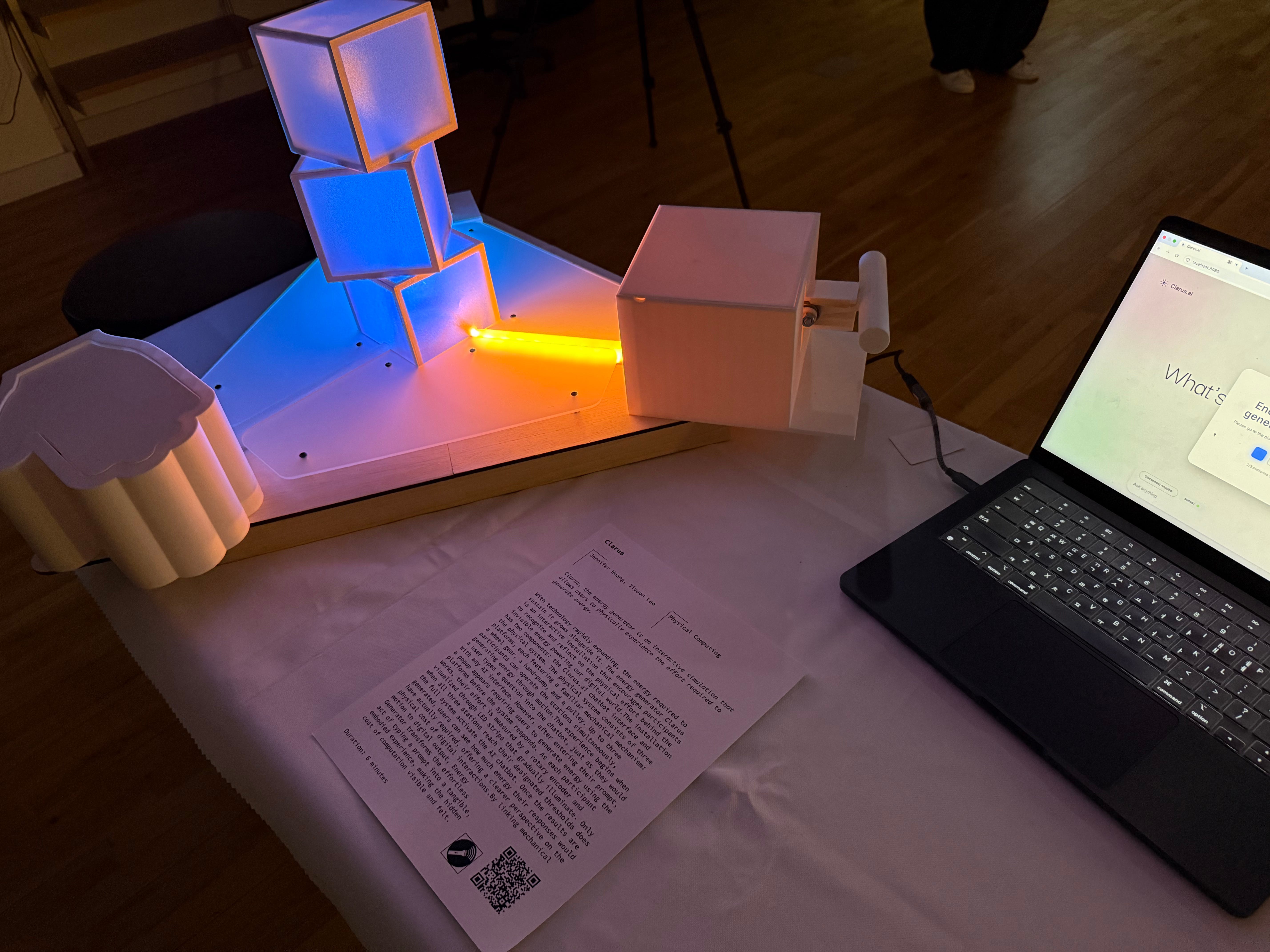
The projects encouraged participants to think about their relationship with technologies. They also used technologies to probe at our relationships with each other and ourselves, with our faith and the natural world. “Clarus,” by Jiyoon Lee and Jennifer Huang, consists of a chatbot interface and physical system of a wheel-gear, hand-pump, and pulley. You ask a question to the chatbot, but have to generate enough energy using the physical system before it will answer.
While the works interrogated much of the potential dangers of technologies, I think the most important part of the exhibition was the sense of hope it inspired. That when built carefully and intentionally, tech can still be creative, thought-provoking, and just really freaking cool.


Offline → online → offline → online → offline → online
This past April, I wrote about the surge in online content about being offline, based on a TikTok I had made in 2024 in response to the “no phone summer” trend. I made two points, which I’ll paste here.
Being offline has become an aesthetic language that, in turn, thrives online.
Getting offline is often facilitated by social media itself. IRL clubs rely on Instagram and TikTok to catch the attention of new members and keep existing ones informed.
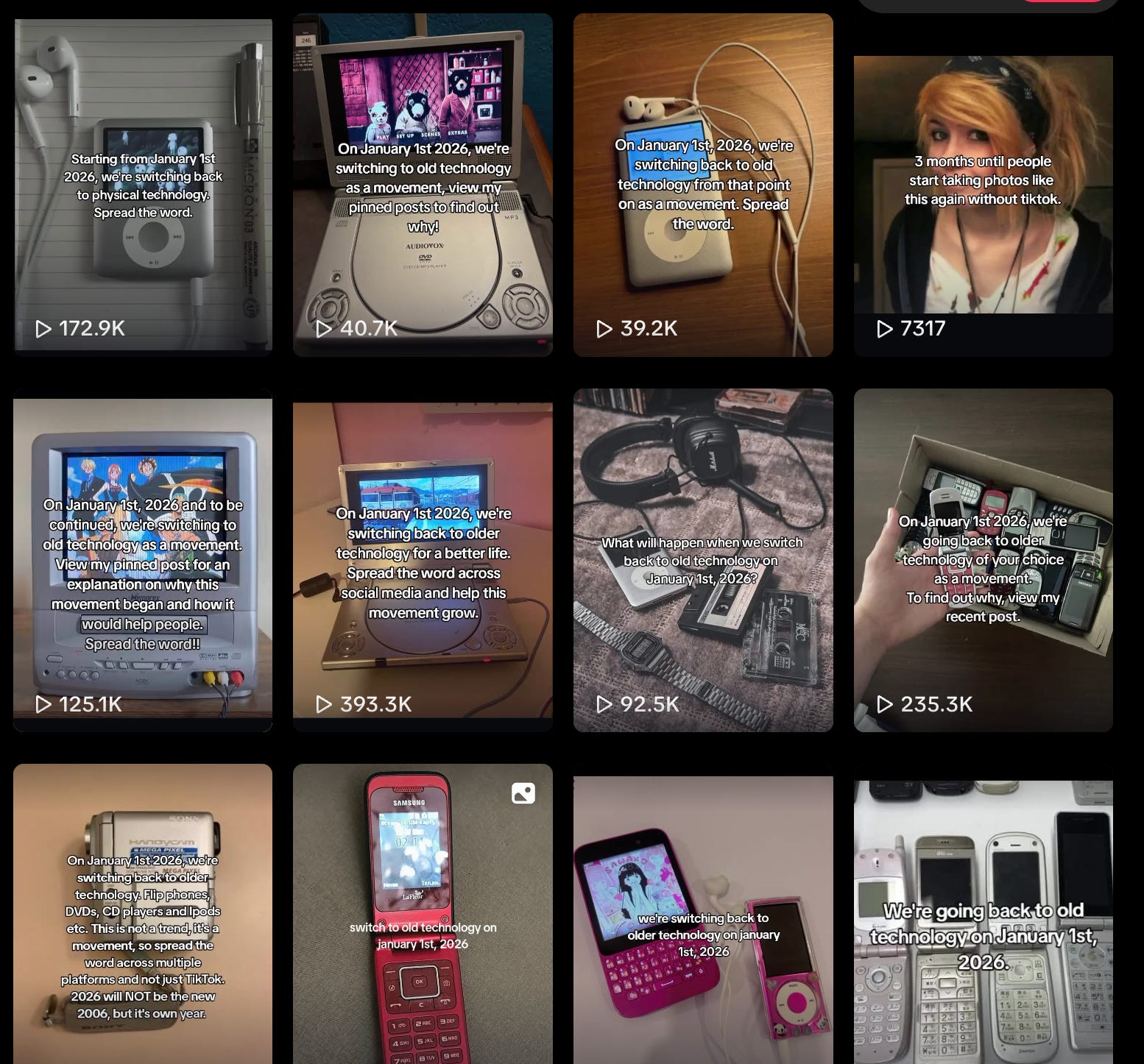
Since I wrote that issue, content and discussion about being offline has only continued to proliferate, from “analog bags” to the movement to return to physical media starting today, Jan. 1. A woman in the United Kingdom named Ava (who declined to provide further identifying information to Newsweek) told the publication that she created the TikTok account @vioiliet_ to encourage others to return to older technologies and offline activities.
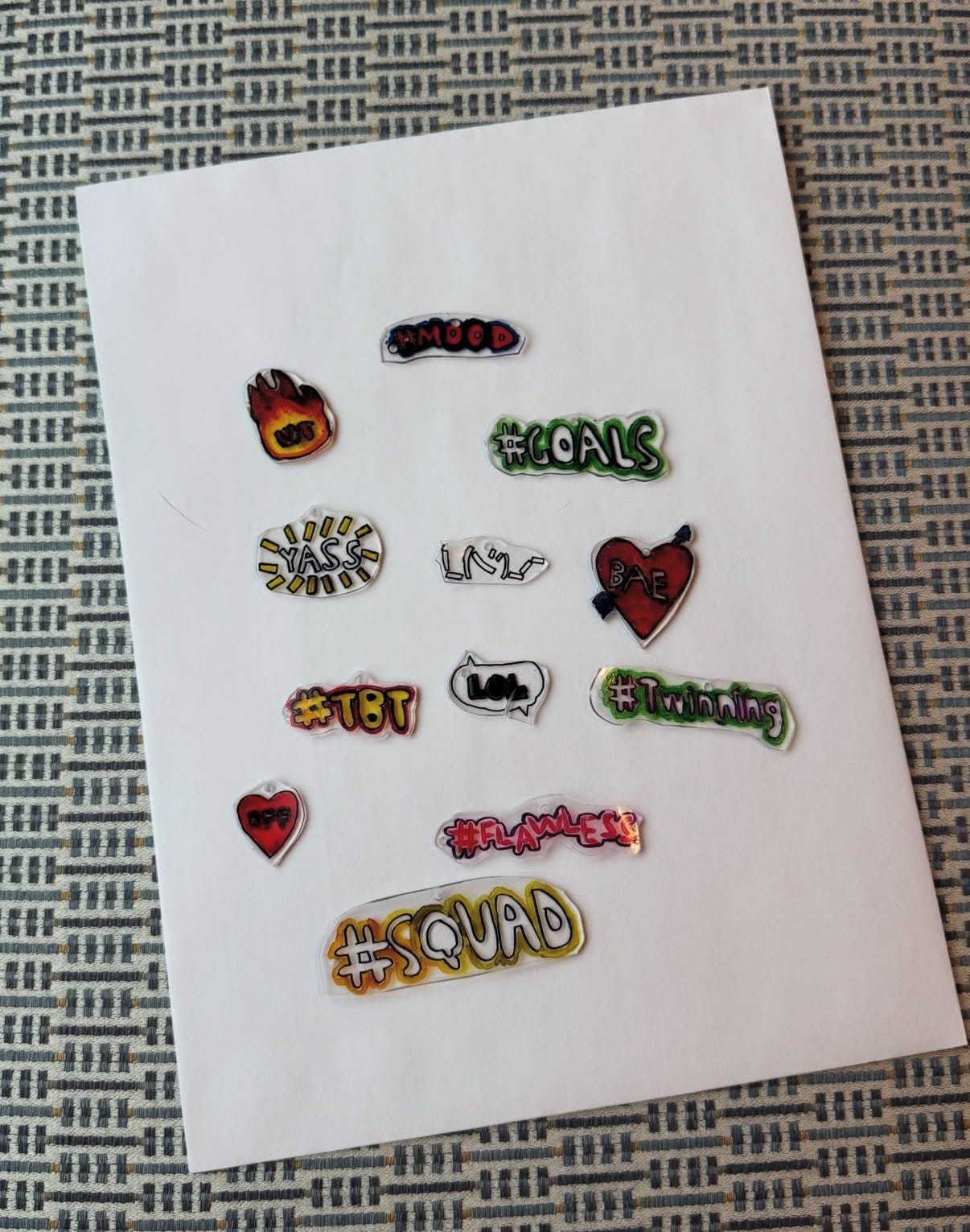
Snail mail and print clubs have also grown in part through Instagram and TikTok pages. Lots of this content is educational, where creators walk others step-by-step how they set up their clubs, how to make prints, etc. I don’t think it’s necessarily a bad thing that content about going offline has become so popular online—as I mentioned in my April newsletter, it’s obviously something people are going to talk about in online forums. That said, it’s a starting point. The real work comes in being intentional, setting and sticking to goals, sitting with the boredom, all of which I’m trying to be better at too. For example, as an offline activity, I recently sat down, put on some music, and made Shrinky Dinks of the Twitter stickers that you can add to photos.

Read more:

Elsewhere online
Ever fallen in love with an AI chatbot? Said “please” and “thank you” to ChatGPT? Tina Tarighian (who I’ve previously interviewed for the newsletter) made an AI Purity Test, modeled after the infamous Rice Purity Test.

See also: SF Tech Bro Purity Test. Read more: